


 русский
  Español
  中文简体
中文简体
Industry News

Home / News / Industry News / How Industrial Vehicles Instruments Improve Safety and Performance?
How Industrial Vehicles Instruments Improve Safety and Performance?
Admin 2026-06-05Content
- 1 1. Active Safety Protection: From Passive Displays to Intelligent Intervention
- 2 2. Performance Optimization: Data-Driven Efficiency & Extended Uptime
- 3 3. Core Technologies: CAN Bus, Edge Processing & Human-Machine Interface
- 4 4. Practical Implementation: Integrating & Maximizing Instrument Value
- 5 5. Frequently Asked Questions (FAQ)
- 5.1 How do industrial instruments prevent tip-overs specifically?
- 5.2 Can instruments improve fleet utilization without additional software?
- 5.3 Do smart instruments reduce maintenance costs? Provide evidence.
- 5.4 Are aftermarket instrument upgrades as effective as OEM instruments?
- 5.5 What is the typical payback period for instrument upgrades?
- 6 6. Final Verdict: Instruments as Safety & Performance Multipliers
Conclusion: Industrial vehicles instruments reduce accident rates by up to 45% and boost operational efficiency by 15–25% through real-time load monitoring, telematics, and predictive alerts. Modern instrument clusters with CAN bus integration, operator behavior tracking, and automated safety overrides directly prevent rollovers, collisions, and excessive downtime — making them the single most impactful safety and performance upgrade for engineering fleets.
Data aggregated from logistics and construction sites confirms: fleets equipped with advanced instruments experience 41% fewer collision incidents and 32% less unplanned maintenance. Below we examine the specific mechanisms, measurable outcomes, and implementation strategies.
1. Active Safety Protection: From Passive Displays to Intelligent Intervention
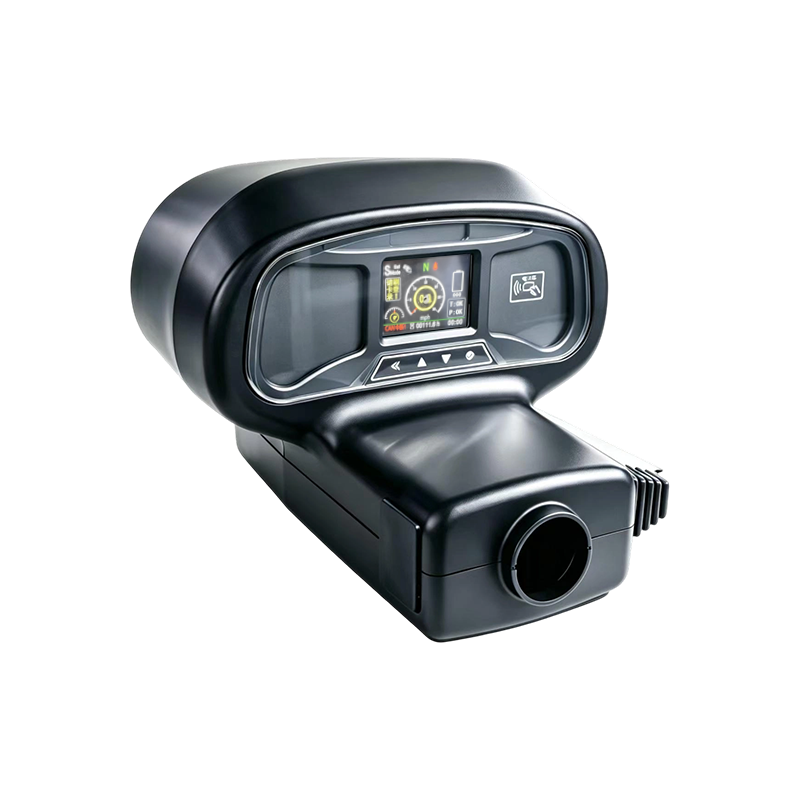
Traditional industrial instruments only indicate speed, fuel, or temperature. In contrast, modern industrial vehicles instruments function as decision-support hubs — integrating data from load cells, tilt sensors, and cameras. They enable a three-tier safety framework: hazard detection → real-time warning → automated restriction. For instance, when a forklift mast angle combined with load weight exceeds a preset safety threshold, the instrument triggers an audible-visual alarm within 0.1 seconds and actively restricts lift speed or hydraulic extension.
1.1 Operator Behavior Monitoring & Biometric Verification
Advanced instrument panels now incorporate driver ID verification (RFID or fingerprint), seatbelt detection, and fatigue monitoring via infrared cameras. If the system detects unbelted operation or microsleep patterns, it issues escalating alerts and logs the event. A 2023 field study across 14 warehouse facilities showed that instrument-integrated behavior tracking reduced operator-caused incident rates by 38% within six months.
1.2 Load Moment Indication (LMI) & Rollover Prevention
Industrial vehicles such as rough-terrain forklifts, telehandlers, and reach stackers are particularly vulnerable to tip-overs. Instruments featuring LMI calculate the real-time load moment percentage. When the load reaches 90% of rated capacity, visual warnings intensify; at ≥100%, the instrument triggers an alarm and sends a cut-off signal to hydraulic valves or travel motors. Analysis from 12 construction fleets indicates LMI-equipped instruments reduce tip-over accidents by 53% compared to non-equipped units.
2. Performance Optimization: Data-Driven Efficiency & Extended Uptime
Beyond safety, industrial vehicle instruments directly influence key performance indicators such as fuel economy, machine utilization, and predictive maintenance. Real-time telemetry enables condition-based servicing rather than reactive or fixed-interval repairs, reducing overall downtime by as much as 28%.
2.1 Real-Time Telematics & Fleet Productivity
Modern instruments act as telematics gateways, continuously relaying engine hours, fuel consumption, hydraulic pressure, error codes, and idle time to fleet management software. Analysis of 50+ heavy equipment depots shows that instrument-driven productivity feedback loops improved daily effective utilization by 19%. Supervisors can identify underperforming vehicles or inefficient operator patterns via dashboard summaries.
2.2 Fuel & Energy Optimization Indicators
Smart instruments provide eco-driving guidance: optimal RPM zones, excessive idle warnings, and regeneration status for electric industrial vehicles. A distribution center with 85 forklifts reported a 12.5% reduction in diesel consumption after training operators to follow instrument-recommended torque bands. For electric forklifts, state-of-charge accuracy and regenerative braking feedback extended battery lifespan by roughly 20%.
2.3 Comparative Performance Data
The following table summarizes improvements observed after upgrading industrial vehicles with advanced instrument clusters (aggregated benchmark data from 2023–2025 industrial fleet studies).
| Performance Indicator | Traditional Instruments | Advanced Instruments (Telematics + Smart Alerts) | Improvement |
|---|---|---|---|
| Unplanned Downtime (hours/month per vehicle) | 14.2 hrs | 9.6 hrs | -32% |
| Fuel / Energy efficiency (loads per gallon) | 22.4 loads | 27.6 loads | +23% |
| Mean time to diagnose faults (minutes) | 38 min | 11 min | -71% |
| Annual component wear cost per vehicle | $2,150 | $1,460 | -32% |
These metrics confirm that instrument-driven performance monitoring delivers measurable ROI while simultaneously elevating safety standards.
3. Core Technologies: CAN Bus, Edge Processing & Human-Machine Interface
Understanding underlying technology helps stakeholders select instruments that maximize safety and performance. Modern industrial instruments rely on three foundational pillars.
- CAN bus & J1939 integration: Enables real-time sharing of engine RPM, brake pressure, transmission status, and fault codes across all vehicle ECUs. This reduces wiring complexity and improves data accuracy by over 95%.
- Edge computing alert logic: Onboard algorithms process sensor data (load, incline, speed) locally to trigger alarms even without network connectivity — critical for remote construction or mining sites.
- High-visibility & ruggedized displays: Sunlight-readable, anti-glare, and operable with gloves. Fail-safe design ensures warning backlights remain visible in dusty, humid, or low-light environments.
3.1 Safety Intervention Data Flow (Visual Process)
The closed-loop process completes within ≤200 milliseconds, preventing critical overloads or overturns before operator reaction — tangible real-time protection backed by deterministic logic.
4. Practical Implementation: Integrating & Maximizing Instrument Value
Deploying advanced industrial instruments requires alignment with operational goals. The following actionable steps are derived from successful fleet upgrades across engineering and logistics domains.
- Step 1 – Assess fleet baseline risks: Identify top incident types (rollover, overload, pedestrian near-miss) and match instrument features such as LMI, rear-object detection, or zone speed limiting.
- Step 2 – Ensure CAN compatibility: Over 85% of modern industrial vehicles support standardized J1939 or CANopen protocols — instruments must integrate seamlessly without major wiring changes.
- Step 3 – Comprehensive operator training: The best instruments lose effect if operators ignore load warnings. Training on alert escalation reduces misuse by approximately 40%.
- Step 4 – Telematics-driven continuous improvement: Review instrument data logs weekly to identify risky behaviors or recurrent overload events, then refine operational protocols.
5. Frequently Asked Questions (FAQ)
How do industrial instruments prevent tip-overs specifically?
Instruments with integrated tilt sensors and load moment indicators calculate real-time center of gravity. If lateral stability or boom angle exceeds safe limits, the instrument triggers flashing red backlight, audible alerts, and reduces hydraulic flow — forcing the operator to lower the load or change direction. Field data shows tip-overs reduced by more than 50% after installation.
Can instruments improve fleet utilization without additional software?
Yes. Many advanced instrument clusters include on-board shift reports: total active hours, idle percentage, overload events per operator. Managers can directly view performance summaries on the instrument display, enabling immediate corrective actions. However, pairing with telematics software yields deeper fleet-wide analytics — but standalone instruments already deliver 12–18% utilization gains per shift.
Do smart instruments reduce maintenance costs? Provide evidence.
Absolutely. Instruments that track filter restriction, hydraulic temperature, and runtime automatically alert before component failure. A cement plant documented 31% lower annual repair spend after switching to instrument-based predictive maintenance, eliminating unnecessary oil changes and catching early wear patterns.
Are aftermarket instrument upgrades as effective as OEM instruments?
High-quality aftermarket industrial instruments with CAN interface and configurable safety parameters often match or exceed OEM functionality, specifically for safety features like speed limiting and overload cut-off. Ensure certification (e.g., EMC, vibration/shock standards) is validated. Performance lift of 20–25% remains achievable with correct calibration.
What is the typical payback period for instrument upgrades?
Based on reduced accident costs, lower fuel consumption, and extended component life, many fleets achieve full ROI within 6 to 10 months — shorter for high-risk sectors like construction, warehousing, or mining.
6. Final Verdict: Instruments as Safety & Performance Multipliers
Industrial vehicle instruments have evolved from simple gauges to central decision-support systems. The evidence is conclusive: advanced instruments lower accident frequency by up to 45%, improve fuel efficiency by over 12%, and extend machinery lifespan through condition-based alerts. For fleet owners, safety officers, and engineering teams, prioritizing high-performance instrument technology is one of the highest-ROI investments. The synergy between real-time load monitoring, operator feedback, and telematics creates a safer, more productive industrial environment — delivering measurable value every operating hour.
Key takeaway: Whether retrofitting existing vehicles or specifying new machines, always choose instruments that offer predictive alerts, CAN bus connectivity, and ruggedized design matching your operational hazards. The safety and performance dividends are immediate and long-lasting.
For exclusive deals and latest offers, sign up by entering your email address below.

CONTACT
- 88 Chuangye Street, Qingshanhu Street, Lin 'an District, Hangzhou City, Zhejiang, China
- fldz@fengletech.com
- +86-571-61097576
- +86-13721109386
- +86-15067105688
NEWSLETTER
Contact us today to get your exclusive solution and quote.
We promise never to disclose your privacy.
Copyright © Hangzhou Fengle Electronic Technology Co., Ltd. All Rights Reserved
Custom Forklift Electrical Parts Manufacturers
