


 русский
  Español
  中文简体
中文简体





1. Introduction to Industrial Vehicle Safety Systems
In modern industrial environments such as bustling warehouses, high-density construction sites, mining operations, and busy shipping ports, heavy machinery operates in close proximity to ground personnel. Heavy equipment like forklifts, excavators, wheel loaders, and reach stackers naturally possess extensive blind spots due to their structural designs, large bulk, and specialized attachments. These visibility challenges significantly elevate the risk of workplace accidents.
To combat these site hazards, Audio-Visual Alarms have evolved into mandatory safety instruments. These integrated systems combine audible warning signals with high-intensity visual indicators to create a multi-sensory alert zone around working machinery. By engaging both the auditory and visual senses of nearby workers, these alarms provide an immediate, unambiguous warning that a vehicle is in motion, reversing, or performing a hazardous maneuver, even in complex and low-visibility industrial settings.
2. Core Technological Components of Audio-Visual Safety Alarms
To understand why advanced warning systems are reliable, it is necessary to examine the core technologies that power these safety devices. A professional-grade system does not merely make noise or flash a light; it utilizes calibrated engineering components to deliver consistent performance under demanding conditions.
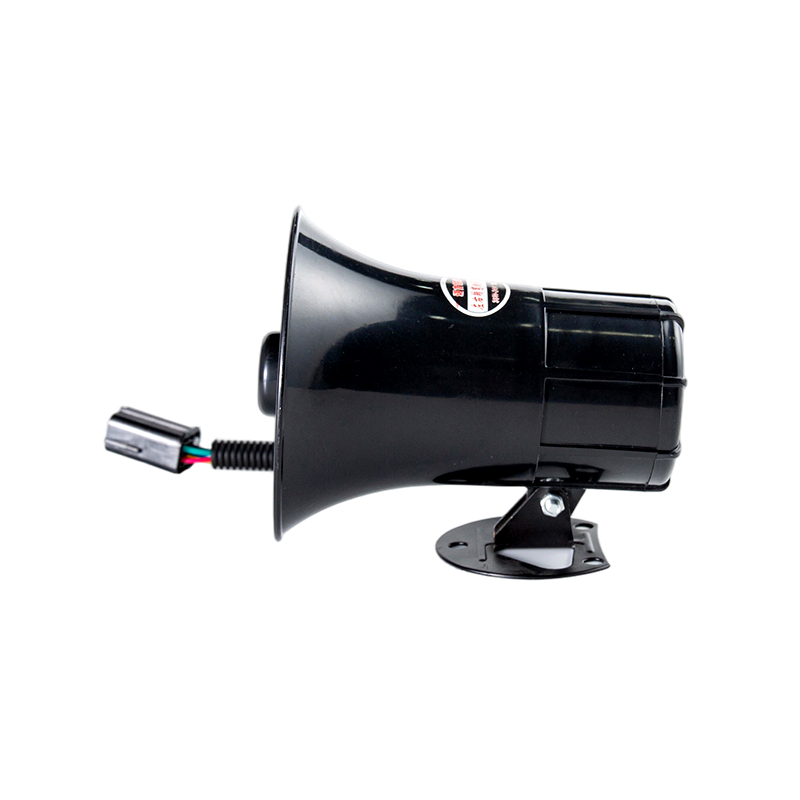
- High-Decibel Acoustic Sounders: Modern alarms utilize solid-state sound generators capable of producing consistent decibel outputs, typically ranging from 97 decibels to over 112 decibels. This ensures the sound penetrates deep ambient factory noise or heavy machinery engine roar.
- White Noise and Multi-Frequency Technology: Traditional single-frequency beepers can cause acoustic habituation, where workers subconsciously tune out the sound. Advanced systems use multi-frequency or white noise technology, which creates a directional sound. This allows ground workers to immediately locate exactly which direction the moving vehicle is approaching from.
- High-Intensity LED Optics: Visual signaling units leverage industrial-grade Light Emitting Diodes coupled with engineered focal lenses. These LEDs project high-visibility strobe patterns, rotating light simulations, or focused floor boundaries like red or blue safety spots and line vectors.
- Ruggedized Micro-Controller Units: The internal electronics are managed by intelligent chipsets that regulate voltage stability, sync audio-visual frequencies, and interface directly with the vehicle’s telemetry, engine control units, or reversing gears.
3. Industrial Environment Application Matrix
Different work environments pose unique challenges to safety hardware. Hardware installed on an indoor electric forklift faces completely different stresses compared to hardware mounted on a mining dump truck operating in sub-zero temperatures or heavy downpours.
The following table outlines how technical specifications must adapt to different industrial environments:
| Environment Type | Primary Physical Risks | Critical Technical Requirements | Recommended System Configuration |
|---|---|---|---|
| Indoor Warehouses | Blind corners, aisle intersections, high ambient worker foot traffic | High-focus visual projections, localized directional audio to avoid noise fatigue | Blue or red LED floor spot projectors combined with mid-decibel directional alarms |
| Construction Sites | Flying debris, heavy vibrations, variable outdoor sunlight, mud exposure | Extreme vibration resistance, high-brightness daylight visible strobes, high IP rating | Multi-frequency heavy-duty reversing alarms paired with high-intensity amber LED beacons |
| Mining Operations | Extreme dust, corrosive soils, severe impact risks, absolute darkness | Cast alloy housings, impact-proof lenses, maximum ingress protection, ultra-high decibels | Heavy-duty explosion-proof audio-visual enclosures with smart self-adjusting volume controls |
| Seaports & Docks | Salt-spray corrosion, high humidity, continuous maritime winds | Marine-grade anti-corrosive coatings, UV-stabilized polycarbonate optics, sealed wiring | Stainless steel or specialized composite body alarms with IP69K waterproof ratings |
4. Regulatory Compliance and International Standards
Deploying industrial vehicle components on a global scale requires strict alignment with recognized safety standards. International procurement departments prioritize suppliers whose designs conform to rigorous certification frameworks.
First, standard compliance involves Ingress Protection codes, commonly known as IP ratings. For industrial vehicle electronics, ratings like IP67 or IP69K are essential. IP67 ensures the device is fully dust-tight and can survive temporary immersion in water. IP69K represents the highest tier of protection, certifying that the electronic enclosure can withstand close-range, high-pressure, high-temperature washdowns, which are common when cleaning heavy mud or industrial grime off construction machinery.
Second, acoustic standards outlined by organizations like the Occupational Safety and Health Administration and the International Organization for Standardization dictate minimum sound levels for reversing alarms. Systems must output a sound level that is clearly distinguishable above the surrounding ambient noise matrix. Furthermore, visual components often must comply with European Economic Commission regulations or Society of Automotive Engineers standards for optical intensity and color chromaticity, ensuring that warning colors like amber, red, and blue conform to precise global definitions for hazard recognition.
5. Engineering Customization in Automotive Electronics
In the heavy equipment manufacturing sector, a one-size-fits-all approach is rarely successful. Engineering vehicles are highly specialized tools, and their integrated electronic accessories must be tailored to match precise operational parameters. Customization plays a vital role in successful integration.
Customization begins with electrical compatibility. Industrial vehicles run on diverse electrical system voltages, ranging from standard 12-volt or 24-volt systems in smaller utility trucks to 48-volt, 80-volt, or even higher voltage arrays in heavy electric material handling machinery and specialized mining equipment. Alarm systems must therefore feature wide-voltage input capabilities or customized power management boards to prevent frying the internal electronics during voltage spikes.
Physical and functional customization is equally critical. Original Equipment Manufacturers often require unique mounting brackets to fit tight spaces within a vehicle chassis, specialized wiring harness lengths with waterproof automotive connectors like Deutsch or Amphenol, and custom flash patterns or programmable audio voice prompts tailored to specific factory rules. By delivering custom-tailored solutions, safety systems fit seamlessly into factory production lines without requiring aftermarket modifications.
6. The Advantages of Choosing Hangzhou Fengle Electronic Technology Co., Ltd.
As a national high-tech enterprise, Hangzhou Fengle Electronic Technology Co., Ltd. serves as a premier partner in the automotive electronics domain, offering unparalleled corporate and technical advantages to global buyers:
- End-to-End Integration Capabilities: We seamlessly bridge the entire product lifecycle by integrating design, research and development, precision production, and global sales under one unified operational roof.
- Innovative Core Technologies: Driven by a passion for technical evolution, our engineering teams continuously push boundaries, developing highly reliable customized solutions that solve real-world visibility and acoustic challenges.
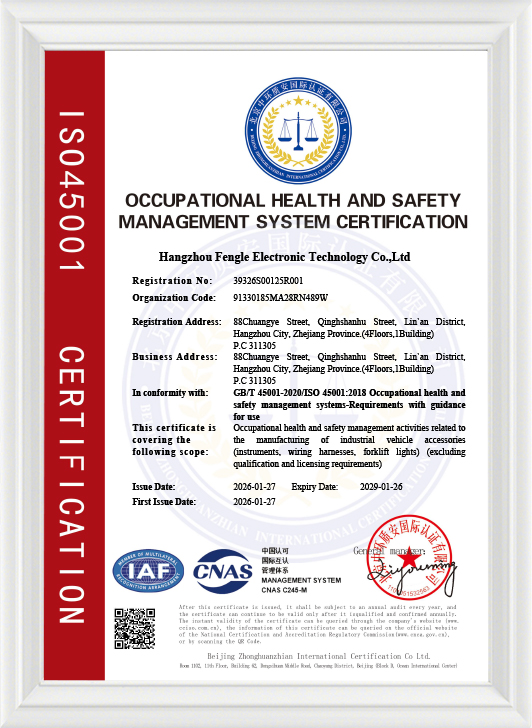
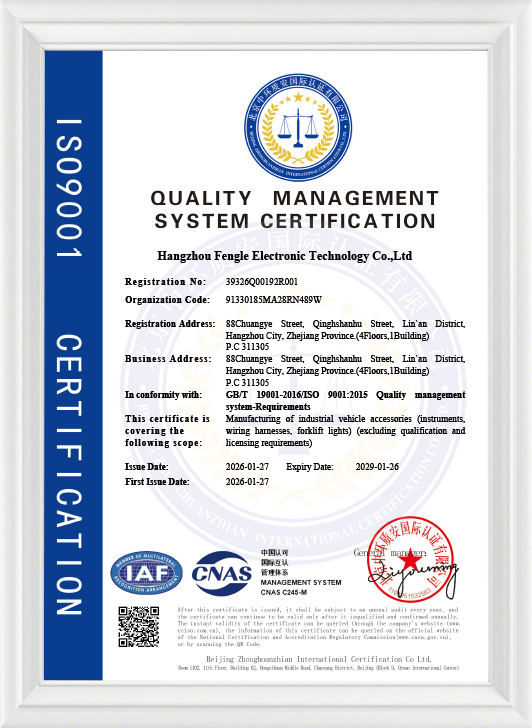
- Rigorous Quality Engineering: Operating within the demanding automotive electronics landscape, our manufacturing and testing protocols guarantee that every product batch exhibits structural integrity, stable voltage regulation, and durable environmental resistance.
- Tailored OEM and ODM Solutions: We understand the nuances of the engineering vehicle industry, offering robust custom electrical and physical adaptations to meet the exact application requirements of our partners.
- Dedicated Global Support: Our commitment extends beyond delivery, providing clients with comprehensive technical support, application guidance, and documentation to maximize fleet safety and project success.
7. Frequently Asked Questions
FAQ 1: What is the main difference between traditional backup beepers and white noise audio alarms?
Traditional backup beepers emit a single-frequency tonal sound that can be difficult to localize and often causes noise fatigue across a job site. White noise or multi-frequency alarms emit a broadband sound that ground workers can instantly locate, pinpointing exactly which vehicle is moving. Additionally, white noise dissipates quickly outside the immediate danger zone, reducing overall environmental noise pollution.
FAQ 2: Why is an IP69K rating important for industrial vehicle electronics?
An IP69K rating ensures the highest level of protection against dust and moisture ingress. It means the alarm system can withstand high-pressure steam cleaning and intense jet washes at close range. This is an essential requirement for construction, mining, and agricultural vehicles that operate in muddy environments and undergo regular heavy cleaning.
FAQ 3: Can these audio-visual alarms operate on electric forklifts with high-voltage battery systems?
Yes. Professional industrial safety components are engineered with wide-voltage input circuits. Hangzhou Fengle Electronic Technology Co., Ltd. designs systems that safely accommodate the varied electrical architectures found across the industry, supporting standard low voltages as well as high-voltage electric vehicle configurations.
FAQ 4: How do visual boundary lights improve pedestrian safety around moving heavy machinery?
Visual boundary lights, such as blue spot or red line indicators, project high-intensity beams directly onto the warehouse or factory floor. These projections create a visible buffer zone around the vehicle. This allows ground workers to maintain a safe distance, even when navigating blind intersections or turning corners where the vehicle itself is not yet visible.
FAQ 5: What customized options can be developed for large-scale corporate fleet deployments?
Custom options include tailored mounting bracket designs, specific wiring harness lengths with pre-installed heavy-duty connectors, specialized acoustic decibel settings, custom housing colors, and unique flash sequences or localized spoken voice alarms to match specific corporate safety protocols.
This targeted technical overview provides an excellent framework for your independent website’s product category or deep-dive knowledge base page, delivering the keyword depth and authoritative tone required to excel in global search engine optimization.

