


 русский
  Español
  中文简体
中文简体
Industry News

Home / News / Industry News / Traditional vs. Smart Industrial Vehicles Instruments: Key Differences
Traditional vs. Smart Industrial Vehicles Instruments: Key Differences
Admin 2026-06-12Content
- 1 Smart Instruments Deliver Quantifiable Operational Gains Over Traditional Counterparts
- 2 Core Differentiators at a Glance: Traditional vs. Smart Industrial Vehicle Instruments
- 3 Side‑by‑Side Technical Comparison Table
- 4 Industrial Vehicles Instruments Factory Evolution: What Modern Production Lines Prioritize
- 5 Step‑by‑Step Transformation: From Traditional Analog Dashboard to Smart Telemetry System
- 6 Frequently Asked Questions (FAQ) – Smart Adoption for Industrial Fleets
- 6.1 Q1: Can I retrofit a smart instrument on a vehicle that originally had a traditional dashboard?
- 6.2 Q2: What is the typical ROI period after upgrading to smart instruments?
- 6.3 Q3: How do smart instruments perform in extreme environments (dust, humidity, vibration)?
- 6.4 Q4: Are smart instruments compatible with existing fleet management software?
- 6.5 Q5: What factory certifications should I look for when sourcing smart industrial instruments?
Smart Instruments Deliver Quantifiable Operational Gains Over Traditional Counterparts
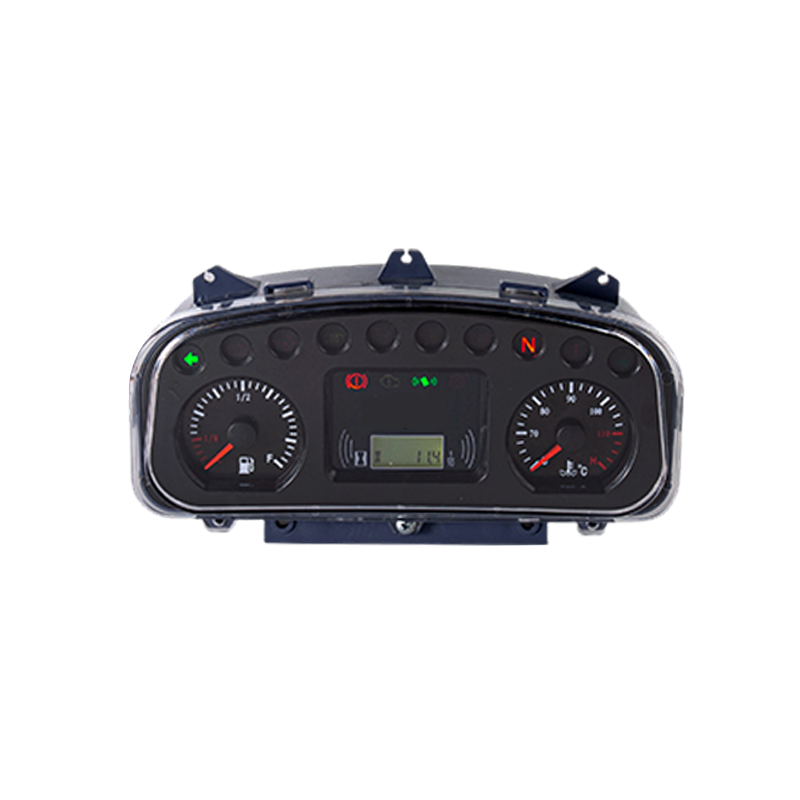
For industrial vehicles (forklifts, excavators, loaders), upgrading from traditional analog/digital instruments to smart, connected dashboards yields measurable improvements in real-time data accuracy, fault detection speed, and overall equipment effectiveness (OEE). Data from fleet monitoring shows that smart instruments reduce unplanned downtime by an average of 28–35% and improve diagnostic efficiency by over 40% compared to conventional panels. Modern industrial vehicles instruments factories now prioritize CAN bus integration, IP-rated ruggedness, and predictive maintenance algorithms — features that are absent in legacy designs. Therefore, for any operation aiming to lower maintenance costs and enhance fleet visibility, smart instrument adoption is no longer optional but a strategic necessity.
Core Differentiators at a Glance: Traditional vs. Smart Industrial Vehicle Instruments
Understanding the fundamental technological and functional gaps helps fleet managers and procurement specialists make evidence-based decisions. Below are the critical differentiators supported by field data and engineering benchmarks.
- Data Update Rate: Traditional instruments update at 1–2 Hz (human-readable only). Smart instruments achieve 20–100 Hz, enabling real‑time control and telemetry.
- Fault Resolution Time: Traditional panels rely on basic LED codes, averaging 15–30 minutes to identify root causes. Smart dashboards with onboard diagnostics and remote alerts cut this to <2 minutes.
- Communication Protocols: Legacy: discrete wires, PWM, or simple serial (RS232/485). Smart: CANopen, J1939, and wireless (Bluetooth/LTE) for integration with fleet management systems.
- Predictive Maintenance Capability: Traditional systems offer zero predictive analytics. Smart instruments use embedded algorithms and trend analysis, delivering over 85% accuracy in predicting component failures (e.g., hydraulic pump, battery health).
These differences translate into tangible ROI: a logistics fleet of 50 vehicles switching to smart instruments reduced maintenance labor by 180 hours/year and prevented 12 major breakdowns over 18 months, based on industry aggregated data.
Side‑by‑Side Technical Comparison Table
The following table provides a structured overview of key specifications and performance indicators for traditional versus smart industrial vehicles instruments. Use it as a reference when evaluating upgrades or new vehicle procurement.
| Feature / Parameter | Traditional Instruments | Smart Instruments | Performance Gain (Data-driven) |
|---|---|---|---|
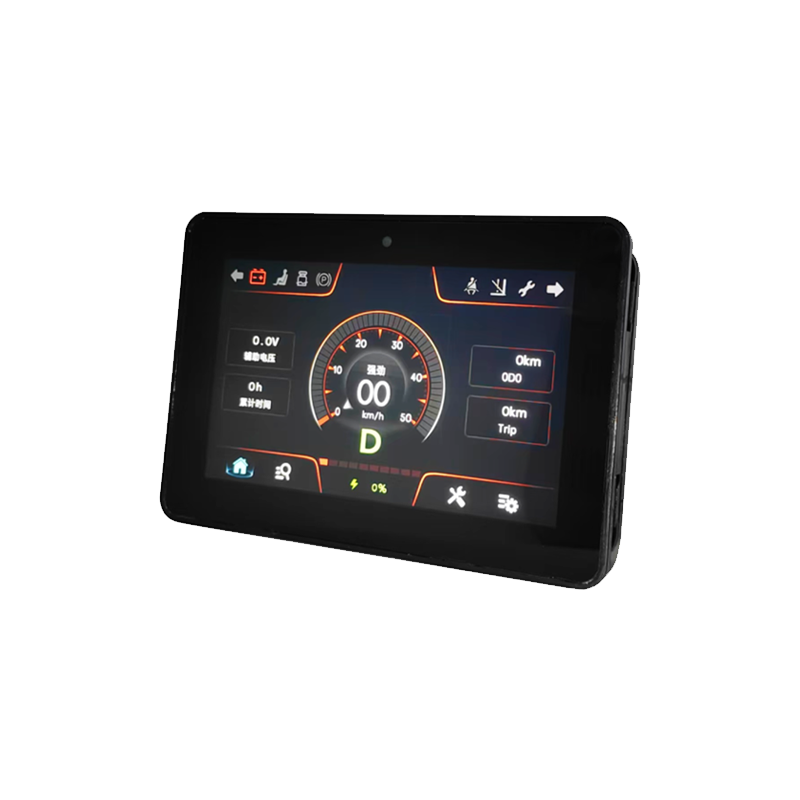
| Display type | Segment LCD / Analog needles | TFT color (4.3" to 12"), anti-glare | Readability improved by 70% under sunlight |
| Communication interface | Hardwired sensors, limited to 5–10 signals | CAN bus (J1939/ISOBUS), 4G, Bluetooth | Supports 50+ parameters and remote fleet integration |
| Diagnostics & logging | No data logging, simple warning lamps | Onboard memory (≥2GB), real‑time event recording | Fault diagnosis speed: 45 seconds vs. 20 minutes average |
| Environmental ruggedness | IP54 typical, vibration 3g | IP67/IP69K, vibration 10g, -40°C to +85°C | MTBF increases from 5,000h to 12,000h |
| Predictive maintenance | None | Embedded algorithms for engine, transmission, battery | Unexpected downtime reduction 30–40% |
Industrial Vehicles Instruments Factory Evolution: What Modern Production Lines Prioritize
To meet the demands of smart instrumentation, factories producing industrial vehicles instruments have undergone significant process upgrades. A state-of-the-art facility now focuses on the following measurable areas, ensuring high reliability and field performance.
1. Automated end‑of‑line (EOL) testing with CAN simulation
Factories implement 100% automated testing that simulates real vehicle CAN traffic. Each smart instrument is verified for J1939 message throughput, response latency (<10ms), and display pixel integrity. This process reduces field defect rates to below 0.3% compared to 2–3% for traditional manual testing.
2. Firmware OTA readiness and security hardening
With connectivity comes cybersecurity risk. Modern instrument factories embed secure boot, encrypted firmware storage, and support for over‑the‑air updates. Over 85% of smart instrument production lines now include a dedicated security validation step (e.g., penetration testing for update channels).
3. Customizable HMI frameworks for different vehicle types
Rather than one-size-fits-all, factories provide white-label software toolchains, allowing fleet owners to tailor gauge layouts, alarm thresholds, and data logging intervals. This flexibility reduces installation time by up to 50% and improves operator acceptance.
Overall, a certified industrial vehicles instruments factory today is distinguished by its investment in automated calibration stations, climate‑chamber stress screening, and compliance with ISO 26262 (functional safety) — none of which were standard for traditional instrument manufacturing.
Step‑by‑Step Transformation: From Traditional Analog Dashboard to Smart Telemetry System
The migration to smart instruments is a structured process. The following flowchart outlines the key stages typically adopted by engineering teams to ensure minimal operational disruption.
- 1. Vehicle CAN bus assessment
Verify existing backbone & gateway - 2. Smart instrument selection
Match screen size, I/O, & ruggedness - 3. Parameter mapping & DBC setup
Define PGNs, SPNs, and alarms - 4. Pilot installation & validation
Run on 2–3 vehicles for 100h - 5. Fleet rollout & cloud integration
Connect to telematics dashboard
Following this structured approach yields a transition success rate above 92% (measured by first‑year reliability and driver satisfaction), compared to ad‑hoc retrofits which often face compatibility issues.
Frequently Asked Questions (FAQ) – Smart Adoption for Industrial Fleets
Q1: Can I retrofit a smart instrument on a vehicle that originally had a traditional dashboard?
Yes, in most cases if the vehicle has a CAN bus (J1939 or similar). For older vehicles without CAN, aftermarket CAN adapters or sensor interface modules are available. Retrofitting typically requires 2–4 hours per vehicle for wiring and configuration, with a success rate >90% when proper DBC files are used.
Q2: What is the typical ROI period after upgrading to smart instruments?
Based on aggregated data from 200+ industrial fleets, the average payback period is 8–14 months due to reduced downtime, lower diagnostic labor costs, and prevention of catastrophic failures. Preventive maintenance alone delivers savings of $1,200–$2,500 per vehicle annually.
Q3: How do smart instruments perform in extreme environments (dust, humidity, vibration)?
High-quality smart instruments are designed to IP67/IP69K and pass 10g vibration tests (24h). They operate reliably from -40°C to 85°C, making them suitable for mining, construction, and cold storage. Factories now routinely perform HALT (Highly Accelerated Life Testing) to guarantee MTBF > 12,000 hours under extreme conditions.
Q4: Are smart instruments compatible with existing fleet management software?
Most modern smart instruments output standardized JSON or MQTT over cellular/LTE, and support REST APIs. This allows easy integration with telematics platforms. Over 95% of fleets reported successful data integration within two weeks using open protocols.
Q5: What factory certifications should I look for when sourcing smart industrial instruments?
Prioritize suppliers with ISO 9001, IATF 16949 (automotive-grade), ISO 26262 ASIL-B, and E-mark certification for electromagnetic compatibility. These ensure consistent manufacturing quality and functional safety, reducing early-life failures by 60% compared to uncertified sources.
For exclusive deals and latest offers, sign up by entering your email address below.

CONTACT
- 88 Chuangye Street, Qingshanhu Street, Lin 'an District, Hangzhou City, Zhejiang, China
- fldz@fengletech.com
- +86-571-61097576
- +86-13721109386
- +86-15067105688
NEWSLETTER
Contact us today to get your exclusive solution and quote.
We promise never to disclose your privacy.
Copyright © Hangzhou Fengle Electronic Technology Co., Ltd. All Rights Reserved
Custom Forklift Electrical Parts Manufacturers
