


 русский
  Español
  中文简体
中文简体
Industry News

Home / News / Industry News / How to Choose Instruments for Electric Industrial Vehicles That Reduce Downtime
How to Choose Instruments for Electric Industrial Vehicles That Reduce Downtime
Admin 2026-09-21Content
- 1 Why Instrumentation Is Different for Electric Industrial Vehicles
- 2 Types of Instruments for Electric Industrial Vehicles
- 3 Key Selection Criteria for Industrial EV Instruments
- 4 Integration Considerations for OEMs and Fleet Operators
- 5 How to Evaluate Instrument Suppliers
- 6 FAQ
- 6.0.1 Q1: What instruments are used in electric industrial vehicles?
- 6.0.2 Q2: What is the difference between a standard vehicle gauge and an industrial EV instrument?
- 6.0.3 Q3: Can I customize an instrument cluster for my electric forklift or AGV?
- 6.0.4 Q4: Do I need J1939 support for my industrial vehicle display?
- 6.0.5 Q5: How often should instrument specifications be reviewed?
- 7 Conclusion and Next Step
Electric industrial vehicles are no longer a niche category. Forklifts, automated guided vehicles, tow tractors, and mining haulers are rapidly shifting to electric powertrains because of lower emissions, reduced maintenance, and tighter energy costs. In this transition, the instrument system has moved from a simple optional accessory to a core operational component. A vehicle that cannot clearly report battery state, motor temperature, fault codes, and power usage is a vehicle that will eventually stop production.
The problem is that many traditional analog dashboards were designed for internal combustion engines. They measure fuel level, oil pressure, and engine speed. They do not handle the data density, diagnostic depth, or communication requirements of an electric drivetrain. This article explains how to evaluate instruments for electric industrial vehicles, what protocols matter, how durability is tested, and what customization options reduce integration risk.
Why Instrumentation Is Different for Electric Industrial Vehicles
A standard automotive gauge cluster assumes an internal combustion engine. An electric industrial vehicle is a different measurement environment. The instrument system must track electrical energy flow, thermal behavior of the motor and battery, and the health of power electronics. That changes the sensor set, the update rate, and the communication architecture.
Real-Time Motor and Battery Data
Electric drivetrains require continuous monitoring of voltage, current, power, motor temperature, inverter temperature, and insulation state. These values change faster than fuel level or oil pressure. A display that refreshes too slowly can hide a developing fault. In industrial duty cycles, such as repeated lifting and braking, the power flow reverses constantly. The instrument system must show both motoring and regenerative operation without lag.
CAN J1939 as the De Facto Standard
Industrial electric vehicles integrate multiple electronic control units: motor controller, battery management system, hydraulic controller, and safety controller. SAE J1939 provides a standardized way to exchange parameters between these units. A display that supports J1939 can read standard parameter group numbers and suspect parameter numbers without custom wiring for every sensor. This reduces harness complexity and speeds up diagnostics.
Harsh Environment Durability
Industrial vehicles operate in vibration, dust, moisture, and wide temperature swings. A warehouse forklift may work in a cold storage room at minus 25 degrees Celsius, while a mining vehicle may face high ambient heat and constant shock. Instrument enclosures must resist ingress and maintain readability under strong sunlight or low light. This is a higher durability class than most passenger car dashboards.
Types of Instruments for Electric Industrial Vehicles
Instrumentation for electric industrial vehicles is not a single product. It is a family of devices that serve different roles: operator display, diagnostics, and measurement. Understanding the categories helps buyers match the device to the task.
Digital Instrument Clusters
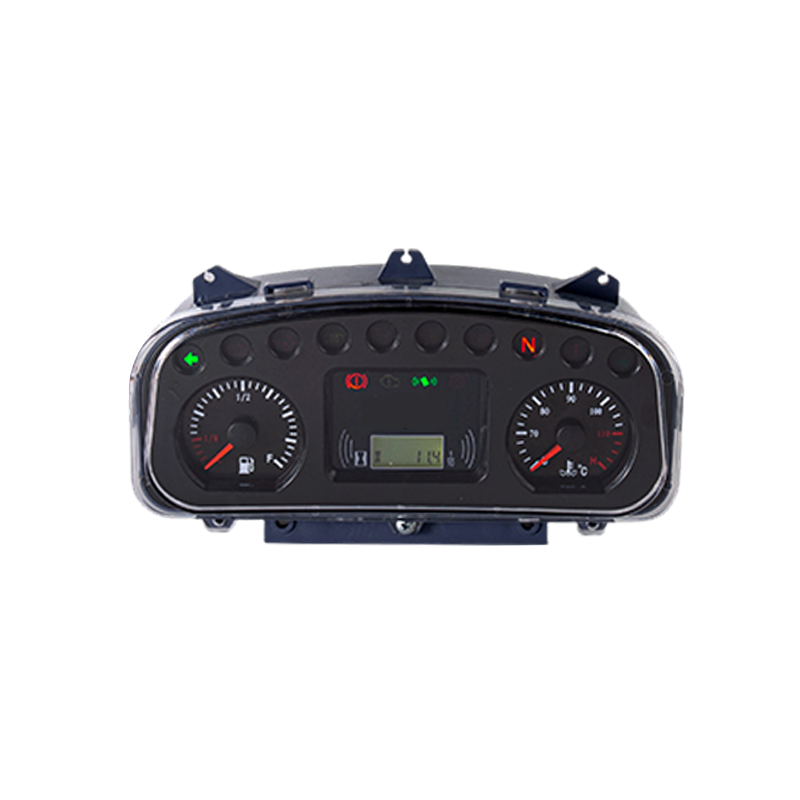
A digital cluster centralizes vehicle information on one screen or a combination of screens. It typically shows vehicle speed, motor speed, battery state of charge, fault codes, and status indicators. Many designs support four to five backlit dials, status LEDs, and an LCD information screen. This format is common on electric forklifts, AGVs, and airport tow tractors where the operator needs a quick overview without scrolling through menus.
CAN J1939 Displays
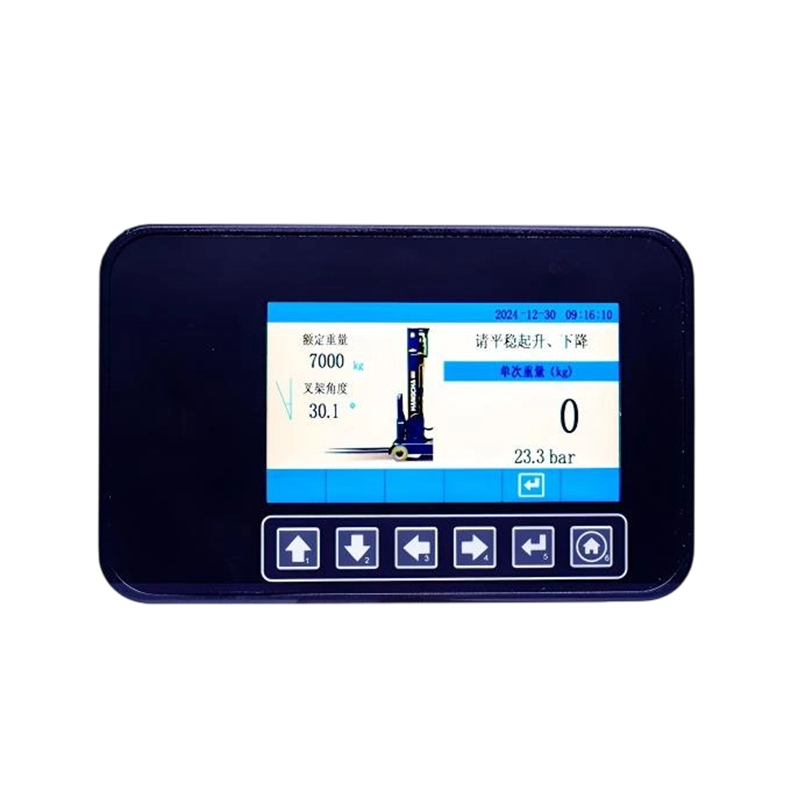
A CAN J1939 display reads standard parameter group numbers and suspect parameter numbers from the vehicle bus. It can also support custom parameter groups when the motor or battery supplier uses proprietary messages. High brightness TFT panels, anti-glare coatings, and wide viewing angles are important for outdoor industrial use. Because J1939 is widely used in industrial vehicles, a compliant display reduces integration work for OEMs.
Diagnostic Instruments: Power Analyzers and Data Loggers
Diagnostic instruments are used in research and development, production line testing, and after-sales service. A power analyzer measures electrical power with high accuracy and may follow IEC 60034-2-1 for motor efficiency testing. A data logger records bus traffic and sensor values over time, which helps engineers reproduce intermittent faults. Portable multimeters and insulation testers support field maintenance.
Frequency and Analog Measuring Instruments
Some industrial vehicles still use analog sensors for speed, pressure, or position. Frequency and analog measuring instruments convert those signals into digital data for display or logging. They are often used when upgrading an older vehicle that cannot justify a full CAN bus retrofit.
| Instrument Type | Primary Use | Typical Interface | Key Selection Point |
|---|---|---|---|
| Digital instrument cluster | Operator display | CAN J1939, analog inputs | Screen readability and layout |
| CAN J1939 display | Multi-ECU data display | SAE J1939 | PGN and SPN support depth |
| Power analyzer | Efficiency testing | Voltage and current sensors | Measurement accuracy class |
| Data logger | Fault reproduction | CAN, analog, digital | Sampling rate and storage |
| Frequency and analog meter | Legacy sensor upgrade | Pulse, 4-20 mA, 0-10 V | Input range and scaling |
Key Selection Criteria for Industrial EV Instruments
This section is written for procurement engineers and fleet technical managers. The goal is to separate must-have requirements from nice-to-have features before requesting samples.
Protocol Compatibility: CAN J1939 and CANopen
Confirm whether the display supports SAE J1939 and whether custom parameter groups can be configured. If the vehicle uses more than one CAN channel, check whether the instrument can handle two or three CAN channels independently. Some systems use one channel for the powertrain and another for the hydraulic or safety controller.
Environmental Durability
Check the IP rating of the enclosure and the sealing of connectors. Industrial vehicles often use sealed connectors such as Molex MX150 type. Review the operating temperature range and the vibration and shock standards the instrument has been tested against. A display that works in a climate-controlled warehouse may fail on a mining haul road.
Customization and SDK Availability
Ask whether a software development kit is available. An SDK allows the OEM to define data mapping, alarm thresholds, and screen behavior. Overlay customization lets the vehicle builder apply its own brand and layout without redesigning the hardware. This is especially important for fleet operators who want a consistent interface across mixed vehicle models.
Safety and Compliance
For safety-related functions, review the functional safety level of the instrument and its software. Some applications require ISO 26262 or ASIL-B. Also confirm that the instrument meets the electromagnetic compatibility requirements of the target market. Industrial vehicles often operate near high-power equipment, so EMC performance is not optional.
- Protocol depth: standard and custom PGN support
- Channel count: one, two, or three CAN channels
- Ingress protection: IP rating and connector sealing
- Temperature range: storage and operating limits
- Customization: SDK, overlay, and parameter configuration
- Compliance: functional safety and EMC
Integration Considerations for OEMs and Fleet Operators
The same instrument can be a good fit for one organization and a poor fit for another. The difference is usually the integration path, not the hardware specification.
OEM Perspective: Shorter Development Cycles
For an OEM, the instrument should reduce development time rather than add to it. A modular platform that supports multiple vehicle models with the same display hardware can lower certification and spare parts costs. The supplier should provide clear documentation for J1939 message mapping and a configuration tool that does not require firmware changes for every new vehicle variant.
Fleet Operator Perspective: Less Unplanned Downtime
For a fleet operator, the instrument is a diagnostic tool as much as a display. Fault codes that are easy to read and log can turn a roadside breakdown into a planned repair. Data logging helps maintenance teams identify repeated failures and adjust service intervals. A display that shows battery state of health can also prevent unexpected range loss during a shift.
Upgrade Path for Analog Fleets
Many industrial fleets still run vehicles with analog gauges. A staged upgrade can start with a CAN J1939 display that reads the existing controller data, followed by sensor replacement where needed. This approach avoids a full vehicle rewiring project and keeps the fleet in service during the transition.
How to Evaluate Instrument Suppliers
Supplier evaluation should go beyond the datasheet. The most common integration failures come from weak documentation, slow firmware updates, or a mismatch between the sales promise and the engineering reality.
| Evaluation Area | What to Ask | Red Flag |
|---|---|---|
| Protocol support | Which PGNs are supported out of the box | Only a short standard list |
| SDK maturity | Is there a simulator and sample code | No documentation or test tool |
| Customization | Minimum order quantity and lead time | Customization only at high volume |
| After-sales support | Firmware update path and spare parts | No long-term availability statement |
| Technical documentation | Wiring, pinout, and message mapping | Incomplete or outdated files |
Request a sample and test it with the actual motor controller and battery management system. A display that works on a bench may behave differently when the bus load increases or when regenerative braking creates rapid data changes.
FAQ
Q1: What instruments are used in electric industrial vehicles?
Electric industrial vehicles commonly use digital instrument clusters, CAN J1939 displays, power analyzers, data loggers, and diagnostic multimeters. The exact mix depends on whether the vehicle is in production, in service, or under development.
Q2: What is the difference between a standard vehicle gauge and an industrial EV instrument?
The main differences are protocol support, durability, and diagnostic capability. An industrial EV instrument is designed for CAN J1939 or CANopen communication, higher ingress protection, wider temperature range, and deeper fault code handling.
Q3: Can I customize an instrument cluster for my electric forklift or AGV?
Yes. Customization is usually available through a software development kit and overlay design. The OEM can define screen layout, alarm thresholds, branding, and data mapping without changing the underlying hardware.
Q4: Do I need J1939 support for my industrial vehicle display?
It depends on the motor controller and battery management system. If those components communicate over SAE J1939, a compliant display simplifies integration. If they use CANopen or proprietary messages, confirm that the display can support custom parameter groups.
Q5: How often should instrument specifications be reviewed?
Industrial electric vehicle technology changes quickly. A review every six to eight months is reasonable for active programs. This helps catch new protocol revisions, updated safety requirements, and improved display options.
Conclusion and Next Step
The right instrument system does more than display speed and battery level. It reduces downtime by making faults visible, speeds up diagnosis by logging bus data, and extends equipment life by keeping the operator aware of thermal and electrical limits. For electric industrial vehicles, the selection process should start with protocol compatibility, then durability, then customization.
If you are specifying a new vehicle or upgrading an existing fleet, request a quote and discuss your custom instrument requirements with a supplier that can provide J1939 documentation, an SDK, and long-term firmware support.
For exclusive deals and latest offers, sign up by entering your email address below.

CONTACT
- 88 Chuangye Street, Qingshanhu Street, Lin 'an District, Hangzhou City, Zhejiang, China
- fldz@fengletech.com
- +86-571-61097576
- +86-13721109386
- +86-15067105688
NEWSLETTER
Contact us today to get your exclusive solution and quote.
We promise never to disclose your privacy.
Copyright © Hangzhou Fengle Electronic Technology Co., Ltd. All Rights Reserved
Custom Forklift Electrical Parts Manufacturers
