


 русский
  Español
  中文简体
中文简体
Industry News

Home / News / Industry News / Industrial Vehicle Lighting: A Fleet Buyer's Guide
Industrial Vehicle Lighting: A Fleet Buyer's Guide
Admin 2026-07-24Content
Poor visibility, not equipment failure, is the most common root cause listed in industrial vehicle incident reports, which is why industrial vehicle lighting is treated as a safety system rather than an accessory on construction, mining, and logistics fleets.
What Is Industrial Vehicle Lighting?
Industrial vehicle lighting refers to lighting systems engineered specifically for vehicles operating in construction, mining, warehousing, agriculture, and port environments, where standard automotive lighting cannot survive constant vibration, dust, and impact. These systems combine LED illumination, sealed aluminum housings, and impact-rated lenses to provide work-area illumination, position signaling, and operator visibility in conditions well outside normal road use.
Common lighting types on industrial fleets
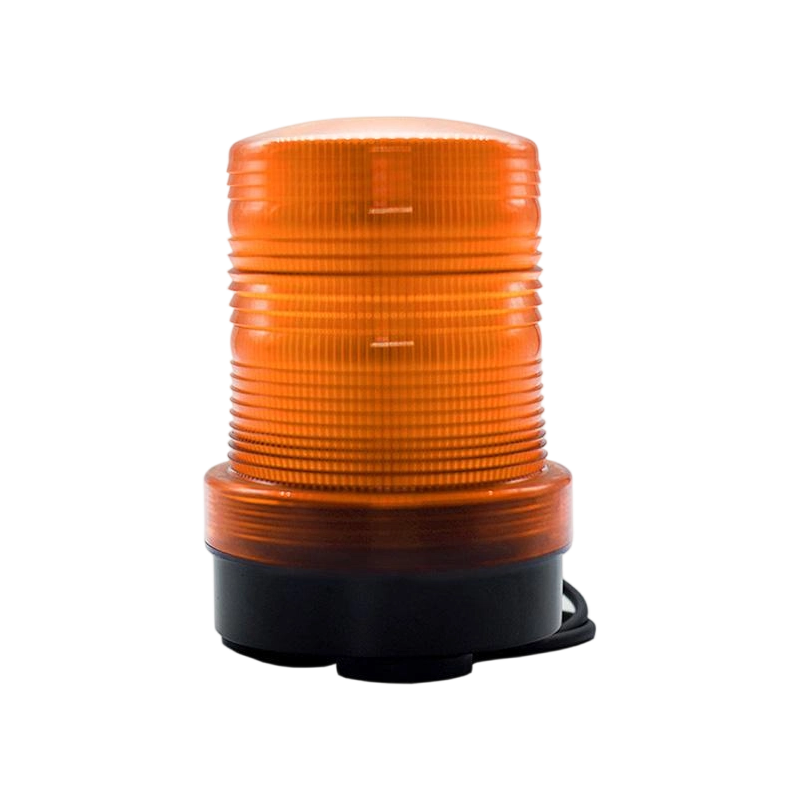
Fleets typically mix several fixture types on a single vehicle: forward work lights for area illumination, warning beacons for position signaling, headlights and rear lights for travel, and specialty mining or underground lights rated for confined, high-heat environments.
Industrial Vehicle Lighting vs Traditional Vehicle Lighting
Traditional vehicle lighting is built for road use; industrial vehicle lighting is built to survive the jobsite.
| Factor | Industrial Vehicle Lighting | Traditional Vehicle Lighting |
| Environment | Built for dust, vibration, and impact | Built for standard road conditions |
| Housing | Sealed aluminum alloy, high IP rating | Lighter housing, lower sealing rating |
| Service Life | Extended LED lifespan reduces replacement | Shorter lifespan under heavy use |
| Typical Use | Construction, mining, logistics, agriculture | Passenger and standard commercial vehicles |
Where Industrial Vehicle Lighting Is Used
Six industries account for the majority of demand for rugged, high-output vehicle lighting.
Forklifts and warehouse vehicles in particular depend on wide-beam work lights to cut blind-spot incidents in narrow aisles, while mining trucks require high-lumen output rated for confined, low-visibility underground conditions.
How Industrial Vehicle Lighting Is Manufactured
Manufacturing precision at the assembly stage is what determines whether a fixture survives years of vibration in the field.
- Optical simulation. Beam pattern and light distribution are modeled before tooling begins.
- Housing manufacturing. Aluminum alloy housings are machined for heat dissipation and impact resistance.
- LED module assembly. Chips are mounted and paired with circuit boards.
- Lens and seal integration. Lenses are fitted with waterproof gaskets to reach the target IP rating.
- Electrical testing. Voltage, brightness, and circuit integrity are verified.
- Vibration and impact testing. Units are stress-tested to confirm field durability before shipment.
How to Choose an Industrial Vehicle Lighting Supplier
A dependable industrial vehicle lighting supplier should provide IP rating certification, vibration test data, and rated service life figures for every fixture, not just a lumen output number on a spec sheet. Suppliers unable to produce this documentation are the most common source of premature fixture failure in the field.
Also confirm the supplier's OEM customization ability for beam pattern, voltage, mounting structure, and connector type, since fleet vehicles rarely share a single standard fitment across manufacturers.
Frequently Asked Questions
What IP rating should industrial vehicle lighting have?
IP67 or higher is standard for outdoor construction and mining applications, ensuring the fixture withstands dust ingress and temporary submersion in water.
How much brighter is LED industrial lighting than halogen?
LED industrial vehicle lighting typically delivers significantly higher luminous efficacy than halogen equivalents at the same power draw, translating to more usable light per watt consumed.
Can industrial vehicle lighting be retrofitted onto older equipment?
In most cases yes, provided the mounting structure and voltage match the vehicle's existing electrical system, which is why confirming connector type and voltage compatibility with the supplier is an essential step before ordering.
How often should industrial vehicle lighting be inspected?
Fleet operators commonly inspect lighting systems at each scheduled vehicle maintenance interval, checking lens integrity, seal condition, and mounting security in addition to output brightness.
For exclusive deals and latest offers, sign up by entering your email address below.



CONTACT
- 88 Chuangye Street, Qingshanhu Street, Lin 'an District, Hangzhou City, Zhejiang, China
- fldz@fengletech.com
- +86-571-61097576
- +86-13721109386
- +86-15067105688
NEWSLETTER
Contact us today to get your exclusive solution and quote.
We promise never to disclose your privacy.
Copyright © Hangzhou Fengle Electronic Technology Co., Ltd. All Rights Reserved
Custom Forklift Electrical Parts Manufacturers
