


 русский
  Español
  中文简体
中文简体
Industry News

Home / News / Industry News / What Defines Quality Industrial Vehicle Signal Lights Suppliers for Mission-Critical Fleet Operations
What Defines Quality Industrial Vehicle Signal Lights Suppliers for Mission-Critical Fleet Operations
Admin 2026-09-14Content
- 1 What to Look for in Industrial Vehicle Signal Light Suppliers
- 2 Types of Industrial Vehicle Warning Lights We Supply
- 3 How to Evaluate Industrial Signal Light Suppliers for Bulk Procurement
- 4 Technical Specifications and Installation Considerations
- 5 Structuring Your Bulk Procurement Process
- 6 Frequently Asked Questions About Industrial Vehicle Signal Lights
- 6.0.1 Q1: What is the difference between ECE R65 and ECE R10 certified signal lights?
- 6.0.2 Q2: Can industrial vehicle signal lights be customized for specific fleet colors or mounting requirements?
- 6.0.3 Q3: What is the typical minimum order quantity for bulk industrial signal light purchases?
- 6.0.4 Q4: How do I verify that supplier-provided certifications are authentic and not self-declarations?
- 6.0.5 Q5: What lead times should I expect from industrial vehicle signal light suppliers for standard and custom products?
- 6.0.6 Q6: How should I approach warranty and warranty claims with industrial vehicle signal light suppliers?
- 6.0.7 Q7: What should my fleet consider regarding power consumption and electrical system compatibility?
- 6.0.8 Q8: How do I evaluate a signal light supplier's production reliability and capacity?
- 7 Executing Effective Industrial Vehicle Signal Light Procurement
Industrial vehicle operations depend on reliable warning and signal lighting systems to ensure fleet safety, regulatory compliance, and operational efficiency. Whether you manage municipal fleets, construction equipment, transportation networks, or specialized industrial vehicles, sourcing from qualified industrial vehicle signal lights suppliers is fundamental to your procurement strategy. The difference between adequate and exceptional warning light systems lies not in price alone, but in certifications, manufacturing standards, light output consistency, and post-sale support capabilities that vendors provide.
This comprehensive guide outlines what procurement professionals should evaluate when selecting signal light suppliers, the product categories available, technical standards that matter, and how to structure a bulk procurement process that minimizes risk while maximizing value for fleet operations.
What to Look for in Industrial Vehicle Signal Light Suppliers
Effective supplier selection requires a structured evaluation framework. B2B procurement professionals should assess multiple dimensions simultaneously: regulatory compliance, manufacturing capacity, customization capabilities, and service infrastructure. The following factors distinguish reliable suppliers from transactional vendors.
Certifications That Matter for Industrial Vehicles
Regulatory compliance serves as the first filter in supplier evaluation. Industrial vehicle warning lights must meet stringent international and regional standards to ensure visibility, durability, and safety across operating environments.
| Certification Standard | Application Scope | Key Requirements |
|---|---|---|
| ECE R65 | Amber warning beacons and rotating lights | Light intensity, flash frequency, color uniformity |
| ECE R10 | Stop and tail lights, position lights | Red light intensity, spatial light distribution |
| IP65 / IP67 | Water and dust ingress protection | Sealed housings, gasket integrity, pressure resistance |
| IK08 / IK10 | Impact resistance ratings | Mechanical durability under shock and vibration |
When evaluating suppliers, request documentation that proves third-party certification rather than self-declaration. Authentic ECE R65 and ECE R10 certified lights are tested in accredited laboratories and carry documentation from recognized notified bodies. IP rating claims should be substantiated through test reports demonstrating seal performance under specified pressure and temperature conditions.
Light Output and Visibility Standards
Warning light effectiveness depends on measurable optical performance metrics that directly influence fleet safety outcomes. Lumens output, color temperature consistency, and light distribution patterns determine visibility in daylight, low-light, and adverse weather conditions.
Key performance parameters to evaluate:
- Luminous intensity range: 400-1500 lumens for amber beacon lights; 600-2000 lumens for high-intensity directional signals
- Color temperature: 2700-3000K for amber tones (standard industrial warning color); tight tolerance to maintain color uniformity across fixture batches
- Light distribution: 360-degree omnidirectional coverage for rotating beacons versus focused beam patterns for directional signals
- Beam angle consistency: Tolerance specifications prevent hotspots and dark zones that reduce visibility effectiveness
- Photometric certification: Test data from accredited labs validates claimed output under standardized conditions
LED technology has transformed industrial signal lighting by delivering superior light output per watt while reducing power draw on vehicle electrical systems. Modern LED beacon lights maintain consistent color rendering across operating temperatures from -40°C to +70°C, addressing performance variability that challenged halogen-based systems in extreme climates.
Request suppliers provide photometric test certificates rather than relying on marketing claims. These technical documents prove light output stability through lifecycle testing and environmental stress conditions relevant to industrial fleet operations.
Types of Industrial Vehicle Warning Lights We Supply
Industrial vehicle signal lighting encompasses multiple product categories, each designed for specific operational requirements and mounting configurations. Procurement teams should understand the technical distinctions and application scenarios for each category to align purchasing decisions with fleet requirements.
LED Beacon Lights for Trucks and Commercial Vehicles
LED beacon lights serve as the most visible warning systems for commercial and industrial trucks. These rotating or strobe-pattern lights are mounted on vehicle roofs and are designed for maximum visibility in all lighting conditions. Modern LED beacons integrate advanced heat dissipation technology to maintain consistent light output despite continuous operation during long shifts.
| Specification | Standard Range | Notes |
|---|---|---|
| Operating Voltage | 12V DC / 24V DC | Wide input voltage tolerance for charging system variations |
| Light Output | 800-1500 lumens | Higher output for daytime visibility on highways |
| Mounting | Magnetic base / bolt-mount / surface-mount | Flexibility for diverse vehicle platforms |
| Flash Pattern | Rotating / strobe / dual-mode | Selectable via firmware or hardware switch |
| IP Rating | IP65-IP67 | Waterproof, dust-proof for outdoor fleet use |
LED beacon lights for trucks demonstrate extended service life compared to incandescent predecessors, often exceeding 50,000 operating hours with minimal degradation. This longevity directly reduces replacement frequency and maintenance costs for fleet operations managing hundreds of vehicles.
Amber Warning Lights for Municipal and Construction Fleets
Municipal and construction fleet vehicles require distinctive amber signaling to differentiate operational status from emergency vehicles. Amber warning lights comply with ECE R65 standards and are commonly used on street sweepers, snow removal equipment, traffic control vehicles, and construction machinery to indicate slow-moving or hazard-present conditions.
Specifications for municipal and construction applications:
- Compact form factors that integrate into existing vehicle lighting housings without major structural modifications
- Submersible connectors with multi-pin configurations supporting simultaneous operation of multiple light circuits
- Modular construction enabling field replacement of LED modules without complete fixture removal
- Certifications specific to regional regulations (ECE standards for European operations, DOT SAE compliance for North American fleets)
- Thermal management designs accommodating ambient temperatures from -30°C to +60°C in seasonal applications
Construction equipment operators particularly value amber warning lights that operate independently from vehicle communication networks, ensuring warning activation persists even if main electrical systems experience intermittent faults. Redundant circuit designs with isolated power control enhance operational safety for equipment working near personnel.
Directional Signal Lights for Specialty Industrial Vehicles
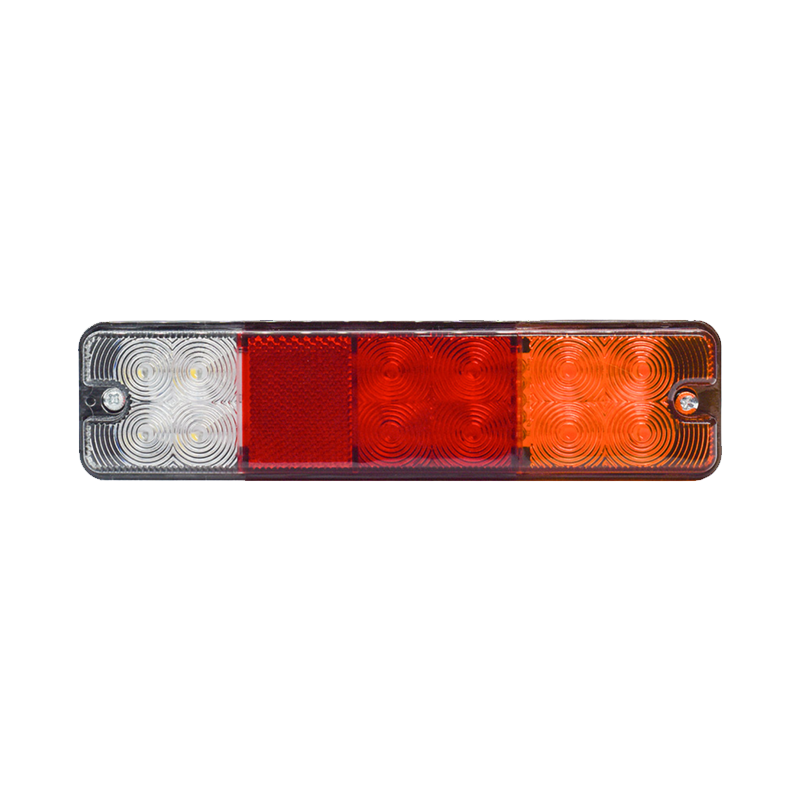
Directional signal systems serve vehicles requiring precise spatial light beaming patterns. Turn signals, lane-change indicators, and directional hazard lights for backing operations demand focused optical designs that project warning information in specific directions rather than omnidirectional patterns.
Directional lighting specifications address:
- Beam angle precision: 30-60 degree focused beams for directed vehicle movement warnings
- Multi-chamber housing designs incorporating separate LED circuits for independent control of multiple directional signals
- Quick-change optical lens assemblies enabling color-specific light transmission (amber, red, white) from modular fixture bodies
- Interface compatibility with vehicle CAN-bus communication systems for synchronized signaling with vehicle dynamics
- High-frequency modulation patterns compatible with automated traffic management and vehicle-to-vehicle communication protocols
Specialty industrial vehicles such as agricultural equipment, airport ground support machinery, and port material handlers benefit from directional signals that communicate specific operational modes to surrounding personnel and automated systems. Integrated signal patterns reduce dependency on driver communication alone, improving operational safety margins.
How to Evaluate Industrial Signal Light Suppliers for Bulk Procurement
Procurement at scale introduces complexity that transactional purchasing does not address. Fleet operations, OEM manufacturing partnerships, and equipment distribution networks require supplier relationships built on production reliability, quality consistency, and responsive support infrastructure. This section outlines the evaluation framework procurement teams should implement.
Production Capacity and Lead Times
Production capacity determines whether suppliers can meet surge demand or maintain consistent delivery schedules. Qualified suppliers maintain documented capacity planning, including monthly production output, equipment utilization rates, and workforce scalability.
Critical capacity questions:
- What is monthly production volume across all product lines, and what percentage is allocated to your specific order category?
- Can the supplier expand output by 25-50% within 30-60 days to accommodate seasonal fleet procurement surges?
- What is the documented lead time from order placement to shipment, and what circumstances trigger extended timelines?
- Does the supplier maintain safety stock of critical components, or does procurement depend on just-in-time supply chains?
- Are there geographic production facilities enabling regional fulfillment to reduce shipping costs and lead times?
Lead time consistency impacts fleet deployment schedules. A supplier offering 45-day lead times with 90% on-time delivery reliability proves more valuable than one citing 30-day lead times with frequent delays requiring expedited shipping at premium costs.
OEM and ODM Customization Capabilities
Original equipment manufacturer partnerships and original design manufacturer arrangements require suppliers with design engineering resources and production flexibility. Customization requests may include modified lens optical properties, alternative connector configurations, integrated control electronics, or vehicle-specific mounting brackets.
Evaluate customization maturity through:
- In-house optical design capabilities using computational modeling to validate custom lens performance before prototype production
- Mechanical design services for mounting solutions, thermal management optimization, and structural integrity validation
- Electronics engineering supporting firmware customization, integration with proprietary control systems, and communication protocol implementation
- Testing facilities enabling accelerated lifecycle validation of custom configurations prior to mass production
- Documented design controls ensuring custom products maintain regulatory compliance throughout development cycles
Suppliers with mature OEM/ODM capabilities typically maintain dedicated project managers coordinating design reviews, documentation packages, and production planning. This organizational structure reduces miscommunication and ensures customized products progress through development on established timelines.
After-Sales Support and Warranty Terms
Post-purchase support infrastructure directly impacts total cost of ownership. A procurement team should understand warranty scope, failure response procedures, and technical support availability before committing to volume orders.
Warranty evaluation criteria:
| Support Element | Standard Industry Practice | Evaluation Focus |
|---|---|---|
| Warranty Duration | 12-36 months from delivery | Longer warranties indicate higher quality confidence; alignment with fleet vehicle lifecycle |
| Defect Coverage | Manufacturing defects, premature LED failure, electrical malfunction | Exclusions for physical damage, incorrect installation, or non-approved modifications |
| Replacement Process | Expedited RMA processing, replacement units shipped within 7-14 days | Documentation requirements, whether defective units must return before replacement ships |
| Technical Support Availability | Email, phone, technical documentation portal | Response time commitments, availability across time zones, technical expertise level |
Request supplier contact information for post-purchase support and conduct trial technical inquiries before finalizing purchase agreements. Response time and technical depth demonstrate organizational commitment to customer success beyond order fulfillment.
Technical Specifications and Installation Considerations
Understanding technical specifications enables procurement teams to validate supplier claims and ensure ordered products meet actual fleet requirements. Installation considerations reveal hidden costs and compatibility issues that become apparent only during implementation.
Electrical System Integration
Industrial vehicles operate on diverse electrical architectures. Procurement must validate that ordered signal lights integrate seamlessly with existing power systems, wiring infrastructure, and control electronics.
Critical integration parameters:
- Operating voltage: 12V DC standard for light-duty commercial vehicles; 24V DC for heavy trucks and construction equipment; wider systems incorporating both voltage tiers in mixed fleet environments
- Current draw characteristics: Peak inrush current during LED module activation; steady-state operating current; compliance with vehicle electrical system capacity limits
- Wiring gauge specifications: Supplier installation documentation should specify minimum conductor sizes ensuring voltage drop remains below 3% at maximum operating distance from power source
- Connector compatibility: Standard automotive connectors, superseal multi-pin connectors, or proprietary configurations requiring adapter harnesses
- Grounding requirements: Isolated or direct-ground configurations; implications for vehicle chassis grounding architecture
Mounting and Environmental Durability
Fleet signal lights endure extreme environmental stresses that laboratory testing must validate. Vibration exposure, thermal cycling, corrosive atmosphere exposure, and mechanical impact resistance determine product lifespan in actual operational environments.
Environmental testing standards suppliers should reference:
- Vibration testing per ISO 6954 standard: Verification that light output, electrical connections, and mechanical fasteners maintain integrity under continuous oscillation across frequency ranges present in vehicle operation
- Thermal cycling: Temperature transitions from -40°C to +70°C repeated minimum 50 cycles; validation that seals, solder joints, and optical materials maintain function after environmental extremes
- Salt spray corrosion resistance: Testing per ASTM B117 or equivalent demonstrating housing, fasteners, and connector materials resist coastal salt atmosphere degradation typical in marine environments or winter road salt exposure
- Impact resistance: Drop testing and mechanical shock validation confirming IK rating claims; particular focus on optical lens and LED module structural integrity
Procurement teams should request environmental test data rather than assuming compliance based on marketing claims. Accredited testing facilities provide documented evidence that products achieve claimed durability under standardized conditions.
Structuring Your Bulk Procurement Process
Bulk procurement requires methodical planning that reduces risk while optimizing cost efficiency. The following workflow guides procurement teams through vendor selection, negotiation, and implementation phases.
Phase 1: Requirement Definition
Begin by documenting detailed requirements before engaging suppliers. This discipline prevents scope expansion and ensures all vendors respond to consistent specifications.
Essential requirements documentation:
- Product quantity and delivery schedule: Annual volume projections broken into quarterly increments; seasonal surge requirements; phase-in timelines for fleet transition
- Technical specifications: Operating voltage, light output requirements, color specifications, mounting configurations, electrical connectors, certifications required
- Quality standards: Acceptable defect rates, inspection protocols, documentation requirements, compliance validation
- Customization scope: Optical modifications, control electronics integration, vehicle-specific packaging, labeling and documentation requirements
- Service level expectations: Lead times, warranty duration, technical support availability, replacement procedures, documentation responsiveness
Phase 2: Vendor Evaluation and Selection
Request proposals from qualified suppliers and establish evaluation criteria before reviewing submissions. Structured evaluation prevents bias and ensures consistent assessment across candidates.
Evaluation matrix framework:
| Evaluation Category | Weight | Assessment Method |
|---|---|---|
| Technical capability | 30% | Specifications compliance, certifications held, testing data, design resources |
| Production reliability | 25% | Capacity documentation, on-time delivery history, quality metrics, lead time consistency |
| Pricing and terms | 20% | Unit pricing, volume discounts, payment terms, total cost of ownership analysis |
| Support and partnership | 15% | Warranty programs, technical support responsiveness, account management, reference customers |
| Supply chain risk | 10% | Geographic concentration, component source diversity, business continuity planning |
Site visits to supplier facilities provide invaluable context that documentation alone cannot convey. Procurement teams should observe manufacturing processes, quality control procedures, and inventory management practices to validate organizational claims about production capability and quality standards.
Phase 3: Negotiation and Contract Development
Successful procurement contracts define expectations explicitly and establish mechanisms for addressing unforeseen circumstances. Key contract provisions should address:
- Specification attachments with detailed technical drawings, electrical schematics, and test certificates validating product claims
- Quantity commitments and delivery schedules with provisions for seasonal adjustments; specifications for lead time reduction if demand exceeds forecasts
- Quality standards including acceptable defect rates, inspection protocols, non-conformance reporting procedures, and corrective action requirements
- Pricing with volume tier benefits, cost adjustment mechanisms tied to material or labor cost indices, and provisions for mid-contract renegotiation at specified intervals
- Warranty and warranty claims procedures including response timeframes, replacement or credit provisions, and documentation requirements
- Intellectual property protection if customization is involved; confidentiality provisions for proprietary designs or specifications
- Termination provisions addressing performance failures, material breach, or insolvency; notice periods and inventory buyback obligations
Engage legal counsel to review contract language, particularly for high-value or long-term commitments. Clear contractual frameworks prevent disputes and establish expected remedies if performance falls below agreed standards.
Phase 4: Implementation and Ongoing Management
After contract execution, procurement management continues through ongoing vendor oversight. Establish metrics that track supplier performance against contractual commitments and identify problems early.
Performance monitoring should track:
- On-time delivery percentage: Percentage of shipments arriving within committed lead time windows; trend analysis identifying consistency patterns
- Quality metrics: Defect rates, field failure data, warranty claim frequencies, root cause analysis results demonstrating continuous improvement
- Responsiveness: Technical support query resolution time, documentation responsiveness, willingness to address emerging needs
- Cost management: Monitoring for unauthorized price increases, proper application of agreed volume discounts, invoicing accuracy
- Communication effectiveness: Regular business reviews discussing performance data, emerging requirements, and partnership optimization opportunities
Quarterly business reviews formalize communication and demonstrate commitment to the supplier relationship. These meetings reinforce performance expectations while providing opportunities to address emerging challenges or optimization possibilities benefiting both parties.
Frequently Asked Questions About Industrial Vehicle Signal Lights
Q1: What is the difference between ECE R65 and ECE R10 certified signal lights?
ECE R65 establishes standards for amber warning beacons and rotating lights used on vehicles operating below highway speeds or requiring hazard indication. It specifies light intensity, flash frequency, and color uniformity for optimal visibility of slow-moving or hazardous vehicle conditions. ECE R10 addresses red stop and tail lights on all vehicles, establishing intensity and spatial light distribution standards ensuring drivers behind can recognize braking or stationary vehicles. The two standards serve distinct safety purposes: R65 signals operational status, while R10 communicates vehicle motion state to following traffic. Procurement teams must ensure signal light selections comply with regulations applicable to their specific vehicle class and operational environment.
Q2: Can industrial vehicle signal lights be customized for specific fleet colors or mounting requirements?
Yes, mature industrial vehicle signal lights suppliers offer extensive customization including optical lens properties, LED color temperatures, electrical connector configurations, and mechanical mounting solutions. Customization typically requires design engineering engagement and prototype validation before mass production. Lead times for customized products extend beyond standard catalog items by 4-8 weeks depending on modification complexity. Procurement teams should request supplier design capability assessments and request concept reviews before committing to custom product orders. Some suppliers maintain modular product architectures enabling fast customization of specific components rather than complete redesign, reducing engineering effort and accelerating time-to-production.
Q3: What is the typical minimum order quantity for bulk industrial signal light purchases?
Minimum order quantities vary by supplier and product complexity. Standard catalog products typically establish MOQ of 50-500 units depending on production scheduling and inventory positioning. Customized products may require higher minimum orders, often 1000-5000 units reflecting engineering and tooling investments. Procurement teams should negotiate MOQ levels based on budget constraints, storage capacity, and usage velocity. Volume commitments often trigger price discounts and supply prioritization benefits justifying higher initial orders. Requesting flexible delivery schedules enables payment against received goods rather than advance financing entire MOQ quantities, reducing working capital requirements.
Q4: How do I verify that supplier-provided certifications are authentic and not self-declarations?
Request certification documentation from the supplier and contact issuing certification bodies directly to verify accreditation status. Authentic ECE certifications carry identification numbers referencing the notified body that conducted testing. European Directive databases enable verification of certification validity. Request test reports from accredited laboratories rather than marketing documents or manufacturer attestations. Third-party certification carriers lab contact information and test facility identifiers enabling independent verification. Request physical product sample examination by an independent testing organization if certification claims are critical to procurement decisions. Suppliers building long-term partnerships willingly accommodate verification requests demonstrating authenticity confidence.
Q5: What lead times should I expect from industrial vehicle signal light suppliers for standard and custom products?
Standard catalog products typically ship within 20-45 days from order placement, depending on inventory availability and production scheduling. Customized products require 8-12 weeks minimum for design validation, tooling, and production run completion. Lead time consistency varies by supplier; established suppliers maintain documented lead time performance demonstrating reliability. Procurement teams should clarify lead time definitions with suppliers, confirming whether quoted lead times measure from order date or after engineering approval. Expedited production options sometimes accommodate urgent requirements but typically carry 15-25% cost premiums. Building relationships with suppliers enables negotiation of preferential lead times for committed volume customers, particularly relevant for seasonal procurement peaks.
Q6: How should I approach warranty and warranty claims with industrial vehicle signal light suppliers?
Establish warranty scope clearly before purchasing, documenting coverage duration, defect definitions, and claim procedures. Standard warranty periods extend 12-36 months from delivery; longer durations indicate quality confidence but may reflect higher product costs. Warranty claims typically require documentation including installation date, failure description, and photographic evidence of failure mode. Reputable suppliers process warranty claims within 7-14 days, issuing replacement units or credit. Maintain detailed failure records documenting field performance data; this information proves valuable for warranty negotiations and supplier performance assessments. Request warranty claim procedures and contact information during supplier evaluation, validating responsiveness through test claims before volume commitments.
Q7: What should my fleet consider regarding power consumption and electrical system compatibility?
Modern LED signal lights consume substantially less electrical power than incandescent predecessors, typically drawing 1-5 amps depending on light output requirements. Standard 12V DC and 24V DC vehicle electrical systems accommodate LED beacon lights without system upgrades for typical fleet applications. Verify that ordered signal lights remain within vehicle alternator charging capacity when combined with other electrical loads. Request supplier documentation specifying operating current and voltage drop characteristics at maximum operating distance. Test installations on representative fleet vehicles ensure electrical system compatibility before fleet-wide deployment. Vehicles with multiple signal lights or power-limited electrical systems may require capacity assessment or electrical system upgrades affecting total installation costs.
Q8: How do I evaluate a signal light supplier's production reliability and capacity?
Request supplier documentation including monthly production output, equipment specifications, workforce size, and capacity planning methodologies. Site visits enable observation of manufacturing processes, inventory management, and quality control systems. Question suppliers specifically about their ability to accommodate 25-50% demand increases within 30-60 days. Request references from existing high-volume customers and conduct reference calls discussing delivery reliability, quality consistency, and responsiveness. Suppliers with documented quality management systems and lean manufacturing practices typically demonstrate superior reliability compared to smaller operations lacking formal processes. Long-term relationships with established suppliers reduce supply chain risk through demonstrated consistency.
Executing Effective Industrial Vehicle Signal Light Procurement
Sourcing quality industrial vehicle signal lights requires balancing technical specifications, regulatory compliance, supplier reliability, and economic efficiency. The most successful procurement outcomes result from structured evaluation processes that assess suppliers comprehensively before volume commitments, establish clear contractual frameworks defining mutual expectations, and maintain ongoing partnership oversight ensuring sustained performance.
Procurement professionals should approach supplier selection as a strategic opportunity rather than transactional purchasing. Quality industrial vehicle signal lights suppliers deliver consistency, reliability, and innovation that extend fleet vehicle operational life while reducing maintenance overhead. The procurement process outlined above enables teams to identify suppliers capable of supporting fleet growth, responding to emerging requirements, and demonstrating commitment to partnership success.
Begin by defining requirements comprehensively, evaluating vendors against consistent criteria, negotiating contracts that clarify expectations and establish remedies for performance failures, and implementing ongoing performance monitoring. This disciplined approach reduces risk, prevents costly procurement errors, and establishes supplier relationships that support fleet operations through sustained partnership.
For exclusive deals and latest offers, sign up by entering your email address below.

CONTACT
- 88 Chuangye Street, Qingshanhu Street, Lin 'an District, Hangzhou City, Zhejiang, China
- fldz@fengletech.com
- +86-571-61097576
- +86-13721109386
- +86-15067105688
NEWSLETTER
Contact us today to get your exclusive solution and quote.
We promise never to disclose your privacy.
Copyright © Hangzhou Fengle Electronic Technology Co., Ltd. All Rights Reserved
Custom Forklift Electrical Parts Manufacturers
