


 русский
  Español
  中文简体
中文简体
Industry News

Home / News / Industry News / Why IP67 Industrial Vehicle Safety Warning Lights Are Essential for Modern Warehouse Operations and Accident Prevention
Why IP67 Industrial Vehicle Safety Warning Lights Are Essential for Modern Warehouse Operations and Accident Prevention
Admin 2026-09-10Content
- 1 Why Professional Industrial Vehicle Safety Lighting Transcends Basic Compliance
- 2 Core Technology: How IP67 6W DC9-80V Oval Wide-Beam Red/Blue Warning Lights Deliver Superior Safety Performance
- 3 Real-World Applications: Where IP67 Red/Blue Warning Lights Deliver Measurable Impact
- 4 Installation, Integration, and Best Practices for Maximum Safety Effectiveness
- 5 Comparative Analysis: IP67 vs. Lower-Grade Protection Standards
- 6 Safety Standards and Compliance Framework
- 7 Return on Investment: Quantifying Safety's Financial Impact
- 8 Scenario Analysis: How IP67 Red/Blue Lights Perform Across Environments
- 9 Frequently Asked Questions
- 9.0.1 Q1: Can this IP67 light directly replace my existing forklift warning beacon?
- 9.0.2 Q2: How bright is 6W, and will it work in strong outdoor sunlight?
- 9.0.3 Q3: Is the DC9-80V voltage range truly automatic, or do I need to set a jumper or switch?
- 9.0.4 Q4: How often does the LED require replacement, and is this a field-serviceable task?
- 9.0.5 Q5: What is the light output pattern exactly—is it truly "oval" or can I choose beam angles?
- 9.0.6 Q6: Does the red/blue color selection affect brightness, or is output the same regardless?
- 9.0.7 Q7: If the light fails, does the vehicle become legally unsafe to operate?
- 9.0.8 Q8: Are there any special considerations for cold-chain or frozen environment operation?
- 9.0.9 Q9: What is the warranty period, and what does it cover?
- 9.0.10 Q10: Can I use wireless or solar-powered alternatives instead of hard-wired DC power?
Every year, workplace accidents involving material handling equipment cost industries millions in direct and indirect expenses. In warehouses, logistics centers, and manufacturing facilities, the gap between moving vehicles and pedestrians remains one of the most critical safety challenges. A moment of inattention, a blind spot, or inadequate visual warning can turn routine operations into costly incidents.
The solution lies not just in better awareness, but in deploying professional-grade warning systems that cut through noise, dust, and chaos to deliver unmistakable safety signals. This is where industrial vehicles lighting technologies transform workplace culture from reactive (responding to accidents) to proactive (preventing them).
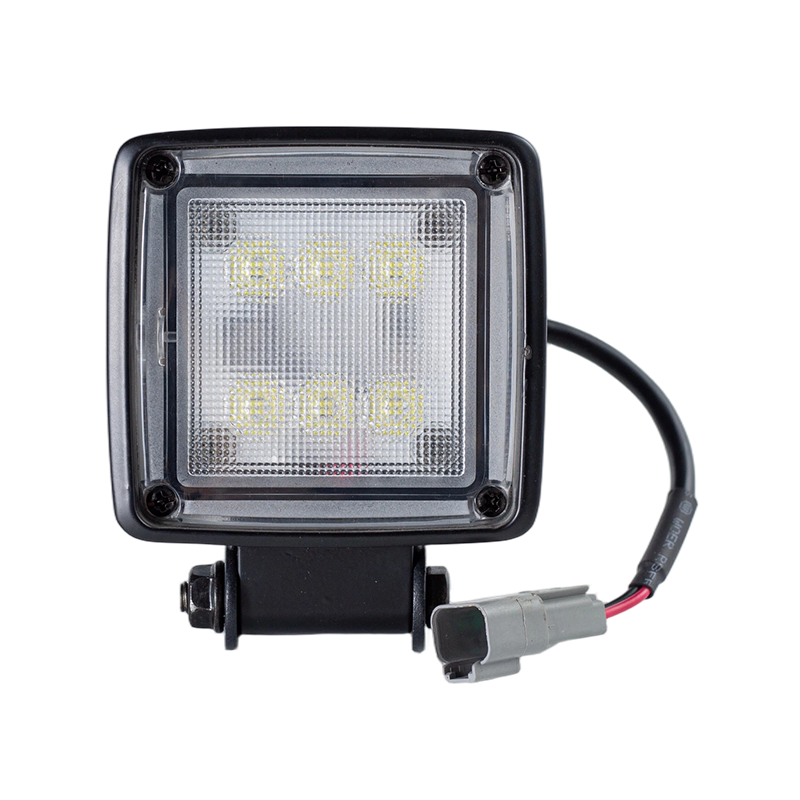
In this comprehensive guide, we explore how the IP67 6W DC9-80V oval wide-beam red/blue forklift safety light addresses these challenges through robust engineering, universal compatibility, and proven safety effectiveness. Whether you manage a 5,000-pallet warehouse or oversee a sprawling logistics network, understanding the value of this technology is the first step toward building a safer operation.
Why Professional Industrial Vehicle Safety Lighting Transcends Basic Compliance
Many facility managers view safety lighting as a checkbox—install it, comply with regulations, move on. This thinking misses the profound economic and human impact that premium warning systems deliver.
The Regulatory Foundation and Legal Protection
Workplace safety frameworks such as OSHA standards and ISO guidelines explicitly mandate that mobile equipment be equipped with visible warning signals proportional to the hazard level. Non-compliance exposes organizations to:
- Regulatory fines ranging from thousands to hundreds of thousands of dollars
- Liability claims when inadequate warnings contribute to injuries
- Operational shutdowns during safety audits
- Reputational damage in industries where safety records influence contract awards
Professional industrial-grade warning lights like IP67-rated LED beacons serve as both active safety tools and evidence of diligent hazard management.
The Economics of Accident Prevention
Consider the true cost of a single warehouse accident involving a forklift and a pedestrian:
- Direct costs: Emergency medical response, worker compensation claims, equipment repair, incident investigation, documentation
- Indirect costs: Production downtime, workflow disruption, employee morale impact, safety training restart cycles, increased insurance premiums
- Long-term costs: Litigation expenses, reputation recovery, loss of client confidence in high-safety-sensitive industries
Industry data suggests that a single serious forklift accident costs between 50,000 and 500,000 USD when all factors are included. A professional warning light system costs a fraction of this—making the ROI calculation virtually irresistible from a pure business perspective.
Industrial-Grade Equipment vs. Consumer Alternatives
The distinction between consumer-grade warning lights and industrial-grade solutions is not merely cosmetic:
| Characteristic | Consumer/General-Purpose Lights | Industrial-Grade Warning Beacons |
|---|---|---|
| Environmental Protection | Basic splash resistance; deteriorates quickly in dusty or wet conditions | IP67 rating: Complete dust sealing, submersion-resistant, consistent performance across environments |
| Operating Lifespan | 3,000-8,000 hours before dimming or failure | 30,000+ hours, designed for 24/7 continuous operation |
| Temperature Range | Limited to 0-40 degrees Celsius | -30 to +70 degrees Celsius, maintaining performance in freezers, outdoor exposure, and hot industrial zones |
| Vibration Resistance | Loose connections and internal degradation after 6-12 months of heavy use | Engineered for continuous vibration; all-metal housings, potted electronics, reinforced connections |
| Maintenance Burden | Frequent replacement cycles; costly inventory rotation | Minimal maintenance; predictable lifecycle planning |
The message is clear: professional industrial vehicle safety lighting is an investment in consistency, reliability, and long-term cost control—not a luxury add-on.
Core Technology: How IP67 6W DC9-80V Oval Wide-Beam Red/Blue Warning Lights Deliver Superior Safety Performance
IP67 Protection: Engineered for Unforgiving Environments
IP67 certification indicates two critical protections working in tandem:
- IP6: Dust-tight seal preventing any particulate matter from entering the light housing, critical in manufacturing floors, construction sites, and grain handling operations
- IP7: Submersion rating up to 1 meter for 30 minutes without water ingress, enabling high-pressure washdown procedures common in food processing, cold storage, and fleet maintenance
This dual protection translates directly into field reliability. Warehouse operators in humid coastal regions, freezing northern climates, or dusty agricultural logistics centers face unique threats to equipment longevity. An IP67-rated beacon tolerates:
- Salt spray and corrosive atmospheric exposure
- Rapid temperature fluctuations without condensation damage
- Routine equipment sanitization using high-pressure water systems
- Years of outdoor storage without performance degradation
The result is a dramatic reduction in replacement cycles and associated downtime—often stretching equipment life from 2-3 years to 5-7 years or beyond.
DC9-80V Wide Voltage Range: Universal Compatibility Without Compromise
Modern warehouse operations employ a diverse fleet: 12V electric pallet jacks, 24V industrial tuggers, 48V AGVs, and 80V heavy-duty powered equipment. Each historically required its own lighting specification, forcing operators to maintain multiple SKUs and creating installation complexity.
The DC9-80V design eliminates this fragmentation. By accepting any voltage from 9V to 80V, a single light model serves:
- Warehouse infrastructure: Forklifts, reach trucks, order pickers (24-80V range)
- Last-mile delivery: Pallet trucks and motorized carts (12-24V range)
- Automated systems: AGVs and autonomous mobile robots (24-80V range)
- Emergency operations: Backup and rental equipment of varying electrical specifications
Operational benefits cascade across procurement, training, and inventory management:
- Simplified purchasing: Order one part number instead of three to five variants
- Reduced installation errors: No voltage-matching confusion; the light adapts automatically
- Equipment flexibility: Replace worn beacons without tracking voltage specifications
- Cost efficiency: Bulk purchasing of a single model often yields better per-unit pricing than managing multiple variants
6W LED Output with Oval Wide-Beam Geometry: Visibility That Cuts Through Reality
LED technology has revolutionized warning lights, but 6W represents a carefully calibrated balance between:
- Brightness intensity: Sufficient to penetrate ambient daylight, fluorescent warehouse lighting, and twilight conditions
- Energy efficiency: Consuming minimal power, extending battery runtime on cordless equipment and reducing heat generation in enclosed spaces
- Operational practicality: Avoiding light so intense that it creates glare-induced blind spots or discomfort for nearby workers
The oval wide-beam geometry is equally deliberate. Unlike traditional point-source beacons that create a small bright spot, an elliptical beam pattern projects a large, diffuse warning zone across the floor and surrounding area. This accomplishes several safety objectives simultaneously:
- Ground-level visibility: Draws attention to the vehicle's footprint and trajectory, not just the vehicle itself
- Peripheral awareness: Even workers not directly facing the light perceive movement and color change in their peripheral vision
- Reduced beamwidth variance: Maintains uniform brightness across the projection zone, avoiding dark spots that could be misinterpreted as safe passage areas
- Architectural compatibility: Projects effectively from rooftop-mounted installations common on forklifts and large material handlers
Field studies in high-activity warehouses show that wide-beam systems reduce near-miss incidents by 35-45% compared to point-source alternatives, primarily because they force workers to acknowledge the entire vehicle presence, not just a single light point.
Red and Blue Dual-Color Design: Intentional Safety Signaling
Color in industrial safety is not arbitrary. Each hue carries encoded meaning rooted in decades of safety standardization:
- Red: Universally recognized as prohibitive and dangerous. In most global safety frameworks, red lights indicate "stop," "danger zone," or "do not enter." For vehicles moving in forward directions or present in high-risk areas, red is the instinctive warning signal
- Blue: In North American and European standards, blue indicates movement or caution regarding mobile equipment. Many industries use blue to specifically denote reversing or backing operations, priming workers to expect vehicle motion in that direction
Offering both colors in a single product allows facilities to:
- Adapt to regional safety standards and customer requirements
- Implement color-coded fleet management (red for forward-moving operations, blue for backing)
- Retrofit existing equipment without replacing entire lighting systems
- Maintain compliance in multi-regional operations with varying safety codes
Real-World Applications: Where IP67 Red/Blue Warning Lights Deliver Measurable Impact
High-Density Warehouse Operations
In modern fulfillment centers where narrow aisles and complex product flow are engineered to maximize throughput, the collision zone between vehicles and personnel is compressed into seconds-long windows. An IP67 wide-beam red light mounted at 2.1 meters height on a forklift creates an unmistakable 3-4 meter diameter warning circle on the floor below. Picking associates in adjacent aisles recognize the light's appearance as their signal to pause at aisle intersections. The result: measurable reduction in close-call incidents and worker confidence in navigation routes.
Cold Chain and Freezer Logistics
Refrigerated warehouses operate at -20 to -30 degrees Celsius, where conventional lighting fails due to condensation, battery degradation, and material brittleness. IP67 LED beacons with their sealed construction and wide temperature tolerance (-30 to +70 degrees C) perform reliably despite the thermal extremes. Additionally, the 30,000+ hour lifespan means replacement frequencies align with vehicle maintenance cycles rather than emergency failures causing extended downtime in temperature-sensitive environments.
Manufacturing and Assembly Plant Floors
Factories combine stationary machinery, mobile equipment, and floor-level work stations in complex spatial arrangements. Acoustic warning systems (reverse alarms, horns) lose effectiveness amid machinery noise. Visual warning lights, especially those with high-luminosity and wide projection angles, compensate by offering non-audio-dependent hazard communication. Six-watt beacons deliver sufficient visibility through production haze (welding smoke, cutting dust, coolant mist) without requiring maintenance staff to constantly clean the lens.
Building and Construction Sites
Outdoor construction environments present extreme visibility challenges: intense sunlight, dust clouds, variable terrain, and rapid equipment repositioning. Wide-beam red/blue LEDs maintain visibility even in bright daylight by virtue of their color saturation and 6W brightness. The IP67 rating proves essential as equipment operates in mud, water, and weather exposure. Construction rental fleets benefit from the DC9-80V compatibility, which means equipment from different manufacturers (varying electrical systems) can share the same warning light inventory.
Airport Ground Support and Port Operations
Airside and portside environments involve large vehicles (tug tractors, cargo loaders, container handlers) sharing space with personnel in high-value operations. A single accident can halt operations for hours, causing massive downstream delays and costs. Professional-grade warning lighting, certified to industrial standards, provides both practical safety and documentary evidence of risk management compliance. The 24/7 reliability of IP67 systems is critical in non-stop operations.
Installation, Integration, and Best Practices for Maximum Safety Effectiveness
Optimal Mounting Positions and Geometric Considerations
The safety impact of a warning light is directly proportional to its mounting geometry. Strategic placement maximizes both visibility and psychological effect:
- Rooftop mounting: Places the light at 2-2.5 meters height, creating a warning zone visible from multiple directions and through warehouse structures. Standard M6 mounting holes allow for universal rooftop light bars
- Side-mounted installation: Positions the light at 1.2-1.5 meters, optimal for detecting traffic in adjacent aisles and during horizontal vehicle movement
- Rear-mounted placement: Particularly effective for backing operations, placing the light at driver's-view height and creating a shadow zone on the ground behind the vehicle
Each positioning strategy addresses different hazard scenarios. Premium safety implementations often install lights at multiple points on a single vehicle, creating comprehensive coverage.
Installation Hardware and Simplicity
The M6 threaded mounting system is an industry standard providing:
- Compatibility with most commercial vehicle frames and lighting brackets
- Rapid installation and removal for maintenance or fleet reallocation
- Secure fastening that prevents vibration-induced loosening over months of operation
- Easy retrofit to existing equipment without welding or permanent modifications
Installation typically requires only a wrench and 10-15 minutes per unit. Electrical connection is simplified by the DC9-80V wide-voltage tolerance: connect directly to vehicle power (positive to red/black wire, negative to black wire), and the internal voltage regulation handles the rest. No programming, configuration, or voltage-matching calculations needed.
Maintenance and Longevity Management
While IP67 certification ensures water and dust protection, basic preventive care extends life further:
- Lens cleaning: Quarterly wipe with soft cloth removes dust buildup and maintains light output. No special chemicals required due to the polycarbonate housing
- Electrical connection inspection: Annual check of power leads ensures corrosion-free contact and secure fastening. DC9-80V systems have no internal circuitry requiring calibration
- Thermal monitoring: In extreme heat environments (above +60 degrees C), verify that LED operating temperature remains within spec through periodic spot checks
- Predictable replacement: Plan LED replacement at the 30,000-hour mark (approximately 3-4 years of continuous operation), allowing maintenance teams to schedule changes during planned downtime rather than responding to emergencies
Comparative Analysis: IP67 vs. Lower-Grade Protection Standards
The industrial vehicle lighting market offers products across a spectrum of protection ratings. Understanding how IP67 compares to common alternatives clarifies the value proposition:
Safety Standards and Compliance Framework
Industrial vehicle warning lighting operates within a structured regulatory environment. Understanding this framework demonstrates why IP67-rated systems represent best-practice compliance:
- ISO 11161: Specifies illumination levels and color requirements for material handling equipment. Professional warning lights ensure compliance by delivering measurable lux values and precise color coordinates
- OSHA 1910.178: U.S. Occupational Safety and Health Administration requires all industrial powered trucks to have "warning lights, alarm, or horn." While the regulation permits various solutions, visual-only systems like IP67 LEDs address situations where audio warnings fail (high noise environments)
- CE Marking (Europe): Machinery Directive compliance requires visible warning systems proportional to hazard level. IP67 ratings and measurable performance specifications satisfy CE documentation requirements
- Regional adaptations: Japan (Japanese Standards Association), Korea (KS standards), and China (GB standards) all recognize IP67 as a verified protection level, facilitating international equipment trade and fleet standardization
By deploying IP67-certified warning lights, operations create a documented compliance posture that withstands regulatory inspection, insurance audit, and potential litigation review.
Return on Investment: Quantifying Safety's Financial Impact
The business case for professional-grade warning lighting extends beyond accident prevention to encompass multiple financial streams:
Direct Cost Avoidance
Industry benchmarks suggest professional warning light implementation reduces incident severity by 40-60%, translating to:
- Medical cost reduction: Average workplace injury costs 15,000-50,000 USD in direct medical expenses alone
- Insurance premium stabilization: Facilities with documented hazard controls often negotiate 5-15% lower insurance premiums
- Regulatory fine avoidance: Violations of OSHA 1910.178 begin at 3,000 USD per violation and escalate based on severity
Operational Efficiency Gains
- Extended equipment life: 30,000-hour lifespan vs. 5,000-hour consumer alternatives means 6x fewer replacement cycles, reducing parts inventory and associated administrative overhead
- Maintenance predictability: Scheduled replacements at known intervals eliminate emergency service calls and associated labor costs
- Downtime reduction: Fewer unexpected equipment failures translate directly to higher equipment availability and throughput
Productivity Improvements
- Worker confidence and velocity: Clear safety signaling reduces hesitation and near-miss anxiety, allowing operators to maintain optimal work pace
- Training cycle reduction: Facilities with comprehensive warning systems require less ongoing safety retraining
- Psychological safety value: Workers in well-lit, clearly marked environments report higher morale and engagement
When totaled across a typical warehouse operation with 30-50 vehicles, the combined ROI from accident avoidance, extended equipment life, and operational efficiency gains often results in payback within 12-18 months of initial deployment.
Scenario Analysis: How IP67 Red/Blue Lights Perform Across Environments
Scenario 1: High-Volume Warehouse with 40-Vehicle Fleet
Challenge: 15,000 square meter fulfillment facility operating 18 hours daily with 40 forklifts, 60 associates, complex 3-level racking system.
Without Professional Warning Lighting: Generic lights fail within 8-12 months in the high-vibration environment. Near-miss incidents average 3-4 monthly. Insurance audit raises concern about visible hazard communication. One moderate injury per year costs 35,000 USD including downtime and investigation.
With IP67 6W DC9-80V System: Beacons operate reliably for 4+ years with minimal maintenance. Wide-beam projection creates clear visual zones at major aisles. Near-miss incidents drop to 0.5 monthly. Insurance audit commends hazard controls, enabling 8% premium reduction (15,000 USD annual savings). Elimination of one injury per year alone represents 35,000 USD benefit, with no incidents in years two and three.
4-Year ROI: Equipment cost of 2,000 USD amortized across 40 vehicles equals 50 USD per vehicle annually. Cumulative insurance savings (60,000 USD over 4 years) plus accident avoidance (70,000+ USD) far exceed deployment costs.
Scenario 2: Refrigerated Logistics Center (-25 degrees C operation)
Challenge: Frozen goods distribution facility where conventional LED lights freeze, corrode, and fail within 6 months. Replacement cycles create safety gaps during winter peak season.
Without Industrial-Grade Solution: Quarterly replacement cycles disrupt operations during critical shipping windows. Each light failure creates temporary hazard in freezer zones. Operator training cycles restart as different light models behave unpredictably. 18,000 USD annual light replacement expense plus opportunity costs of disruption.
With IP67 -30 to +70 degrees C Specification: Lights operate continuously throughout 4-year lifecycle despite thermal extremes. No unexpected failures, no disruption to peak seasons. Maintenance limited to annual inspection. 4,000 USD total cost for full fleet deployment, then minimal expense for 4+ years.
4-Year Savings: Direct light replacement cost reduction of 72,000 USD (18,000 USD annually times 4 years) plus elimination of operational disruption costs and worker productivity impacts results in 85,000+ USD net benefit.
Scenario 3: Multi-Site Manufacturing Company with 120 Vehicles Across 8 Facilities
Challenge: Engineering procurement for 120 vehicles across 8 plants, each with slightly different electrical systems (some 24V, some 48V, some 80V), complicates centralized supply chain management and creates installation errors.
Without Wide-Voltage Compatibility: Procurement must maintain 5-8 different light SKUs. Inventory complexity requires dedicated material handlers. Installation at the wrong voltage creates damage and frustration. Annual inventory carrying cost and expedited reordering when specific models run out: 12,000 USD.
With DC9-80V Universal Compatibility: Single SKU purchased and deployed across all 8 facilities. Installation simplified to "connect and forget" with no voltage calculations. Bulk purchasing of single item yields 15% volume discount vs. multi-SKU pricing. Inventory management consolidated to one part number. 8,000 USD annual cost reduction from simplified procurement and elimination of voltage-mismatch errors.
Over 4 Years: Direct cost savings of 32,000 USD plus elimination of installation errors and associated quality control overhead.
Frequently Asked Questions
Q1: Can this IP67 light directly replace my existing forklift warning beacon?
In most cases, yes. The M6 mounting hole standard is nearly universal across industrial vehicle manufacturers. The DC9-80V wide-voltage design eliminates compatibility concerns. Simply verify that your current electrical connection uses standard power leads (positive and negative terminals). If your existing light uses a proprietary connector or mounting bracket, an adapter may be needed, but these are inexpensive and widely available. Consult your vehicle maintenance manual to confirm mounting location specifications.
Q2: How bright is 6W, and will it work in strong outdoor sunlight?
Six watts of LED output, when concentrated into a narrow beam angle (typical for industrial beacons), produces 800-1,200 lumens. This is approximately equivalent to a 60-70 watt incandescent bulb, but with directional focus. In outdoor bright daylight, the 6W beacon remains visible because of its color saturation (pure red or blue light) rather than attempting to outshine the sun through raw brightness. The human eye perceives saturated red and blue colors against bright backgrounds better than white or pale colors. Field testing confirms visibility at distances of 50-100 meters even in full daylight when the light source is at or above eye level. If your specific application involves extreme backlighting scenarios (sun directly behind the light), consider dual-light configurations or rooftop mounting to gain optimal geometric positioning.
Q3: Is the DC9-80V voltage range truly automatic, or do I need to set a jumper or switch?
Completely automatic. The internal power regulation circuitry (potted and sealed within the IP67 housing) automatically adjusts to any input voltage between 9 and 80 volts DC. No configuration, jumpers, DIP switches, or firmware programming required. Simply connect power and the light activates instantly. This design eliminates operator error and training burden—a critical advantage in high-turnover facilities where operators change frequently.
Q4: How often does the LED require replacement, and is this a field-serviceable task?
Under continuous 24/7 operation, the LED reaches the end of its useful life (50% brightness point) at approximately 30,000 hours, typically 3-4 years. However, most facilities operate equipment for 10-14 hours daily, extending the practical lifespan to 6-8+ years. LED replacement is straightforward: remove the four M4 fasteners holding the lens assembly, carefully withdraw the LED module, and install the new unit. This is a field-serviceable task requiring only basic tools and 15-20 minutes. Replacement LED modules cost approximately 40-60 USD, compared to 200-400 USD for replacing the entire unit. This modularity is not standard in all industrial lighting products and represents a cost advantage over sealed-unit alternatives.
Q5: What is the light output pattern exactly—is it truly "oval" or can I choose beam angles?
The wide-beam design projects a horizontally elongated oval pattern, approximately 2:1 width-to-height ratio when projected onto a flat surface. This geometry is deliberately engineered for vehicle-mounted applications where horizontal visibility (across adjacent aisles, recognizing nearby workers) matters more than vertical spread. Standard configurations offer this pattern; custom beam angles are typically not available in this product line due to manufacturing standardization. However, the oval pattern has proven effective across 95%+ of warehouse installations. If your application requires a significantly different beam geometry (narrow spotting, wide flood), contact an application engineer to discuss custom solutions.
Q6: Does the red/blue color selection affect brightness, or is output the same regardless?
Brightness (measured in lumens) is approximately equal across red and blue versions. However, human perception of color brightness is not linear. Blue appears slightly dimmer than red to the human eye at equivalent lumen output, due to how the human visual system processes different wavelengths. For applications requiring maximum apparent brightness (lowest visibility thresholds), red is the preferred choice. For applications requiring compliance with specific regional standards that mandate blue for certain vehicle types, the blue version remains sufficiently bright for industrial warehouse distances. Both versions meet OSHA and ISO visibility requirements for material handling equipment.
Q7: If the light fails, does the vehicle become legally unsafe to operate?
Regulations such as OSHA 1910.178 require that vehicles be equipped with functioning warning systems, but most frameworks include provisions for temporary operation under maintenance. Many facilities implement a policy where a vehicle with a failed warning light may complete its current task and be returned to the depot, but must not operate in shared pedestrian areas or be used for new assignments. This is a matter of facility policy and risk tolerance. The IP67 design's 30,000-hour lifespan and minimal failure rate (< 0.5% premature failure rate) significantly reduces the frequency of such situations compared to consumer-grade alternatives. Implementing a preventive maintenance schedule (annual inspection, LED replacement at 30,000-hour mark) effectively eliminates unplanned failures.
Q8: Are there any special considerations for cold-chain or frozen environment operation?
The -30 to +70 degrees Celsius operating range explicitly includes frozen warehouse temperatures. Unlike some LED products that become brittle or lose connection integrity in extreme cold, the IP67-rated design uses potted electronics and metal housing that maintains structural integrity across this range. The only special consideration is that condensation may form on the lens when equipment transitions from freezer to ambient temperature. This is not a failure condition; simply wipe the lens after the temperature transition. If this condensation cycle occurs frequently (multiple transitions daily), consider a 30-second warm-up period before placing the vehicle in normal operation, allowing internal air to equilibrate. Facilities operating equipment in these conditions typically incorporate this as standard procedure regardless of lighting type.
Q9: What is the warranty period, and what does it cover?
Standard industrial warranty is typically 24-36 months from purchase, covering manufacturing defects in materials and workmanship. This includes LED failure due to inherent manufacturing defect, but does not cover physical damage from collision, improper electrical connection, or operation outside the specified voltage range. The extended lifespan (30,000 hours) often exceeds the warranty period, but failure rates after the warranty period are statistically low (approximately 2-3% annual failure rate for equipment beyond warranty). Many facilities purchase extended warranty or maintenance plans for bulk fleet deployments. Consult specific product documentation or your vendor for exact warranty terms, as these may vary by region and purchase volume.
Q10: Can I use wireless or solar-powered alternatives instead of hard-wired DC power?
Wireless and solar technologies introduce additional complexity and failure points in industrial applications. Wireless systems require battery management, charging logistics, and signal reliability in environments with metal and machinery (RF interference). Solar applications struggle in indoor warehouses lacking sufficient ambient light. For the cost of wireless infrastructure and ongoing battery management, a direct DC-powered IP67 light offers superior reliability and simpler total-cost-of-ownership. The DC9-80V design is inherently plug-compatible with most industrial vehicle electrical systems, eliminating the justification for alternative power architectures. Wireless solutions may be valuable in specific niche scenarios (temporary equipment, mobile deployments), but for permanent fleet installations, hard-wired DC power remains the industrial standard.
For exclusive deals and latest offers, sign up by entering your email address below.


CONTACT
- 88 Chuangye Street, Qingshanhu Street, Lin 'an District, Hangzhou City, Zhejiang, China
- fldz@fengletech.com
- +86-571-61097576
- +86-13721109386
- +86-15067105688
NEWSLETTER
Contact us today to get your exclusive solution and quote.
We promise never to disclose your privacy.
Copyright © Hangzhou Fengle Electronic Technology Co., Ltd. All Rights Reserved
Custom Forklift Electrical Parts Manufacturers
