


 русский
  Español
  中文简体
中文简体
Industry News

Home / News / Industry News / What Is the Difference Between Beacon Lights and Strobe Lights?
What Is the Difference Between Beacon Lights and Strobe Lights?
Admin 2026-08-07Content
- 1 Understanding Beacon Lights and Strobe Lights
- 2 Light Pattern Characteristics and Visual Impact
- 3 Ideal Applications and Use Cases
- 4 Brightness, Visibility, and Practical Performance Metrics
- 5 Technology Evolution: From Incandescent to LED
- 6 Regulatory Compliance and Safety Standards
- 7 Installation, Mounting, and Integration Considerations
- 8 Maintenance, Durability, and Long-Term Reliability
- 9 Power Consumption and Electrical System Impact
- 10 Decision Matrix: Selecting Between Beacon and Strobe Lighting
- 11 Emerging Trends and Future Developments
- 12 Frequently Asked Questions
- 12.0.1 Q1: Can beacon and strobe lights be used simultaneously on the same vehicle?
- 12.0.2 Q2: Are beacon lights effective in daytime driving situations?
- 12.0.3 Q3: What is the typical lifespan difference between beacon and strobe LED systems?
- 12.0.4 Q4: Do strobe lights carry health risks including seizure triggering in photosensitive individuals?
- 12.0.5 Q5: Which lighting type better suits fork lift and heavy equipment applications?
- 12.0.6 Q6: How do weather conditions affect beacon versus strobe light performance?
- 12.0.7 Q7: What electrical system upgrades are necessary when installing LED strobe lighting?
- 12.0.8 Q8: Are there color selection considerations beyond regulatory requirements?
In the realm of industrial vehicles lighting, choosing the right warning and safety illumination system is paramount. Two prominent solutions stand out: beacon lights and strobe lights. While both serve critical safety functions on heavy equipment, they operate on fundamentally different principles and excel in distinct applications. Understanding these differences ensures optimal visibility, regulatory compliance, and operational safety on job sites and roadways. This comprehensive guide examines the characteristics, advantages, and appropriate use cases for each lighting technology.
Understanding Beacon Lights and Strobe Lights
What Are Beacon Lights?
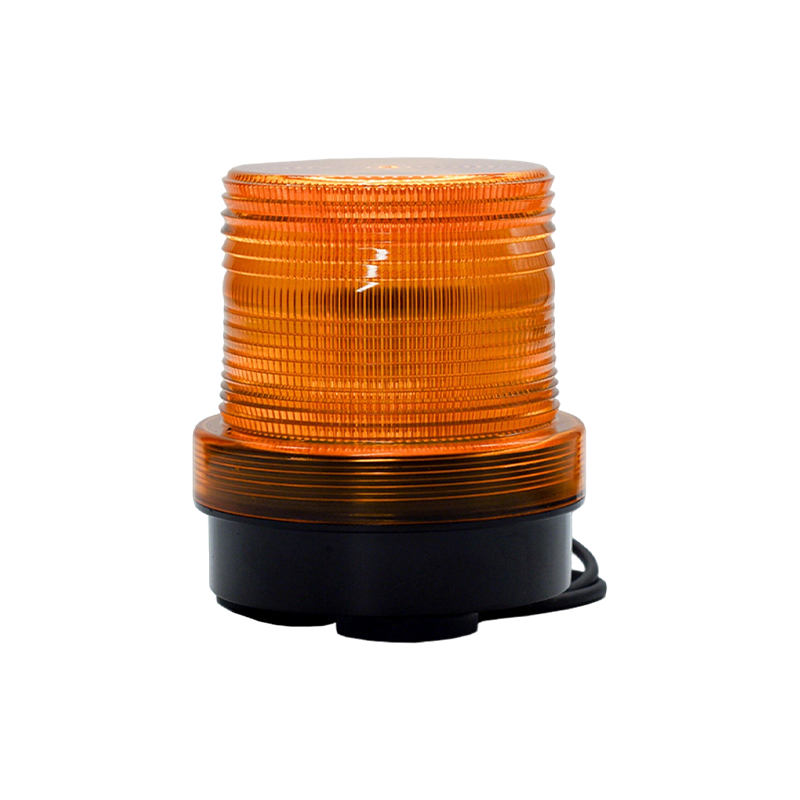
Beacon lights, also known as rotating beacons or beacon warning lights, emit a steady, continuous rotating illumination. These lights typically feature a rotating dome or reflector that produces a constant, predictable light pattern. Traditionally powered by incandescent bulbs, modern beacon lights increasingly use LED technology for enhanced durability and energy efficiency. The rotation mechanism can operate at various speeds, typically between 40 and 120 rotations per minute, creating a distinctive sweeping light pattern that draws attention through persistent, rhythmic visibility.
What Are Strobe Lights?
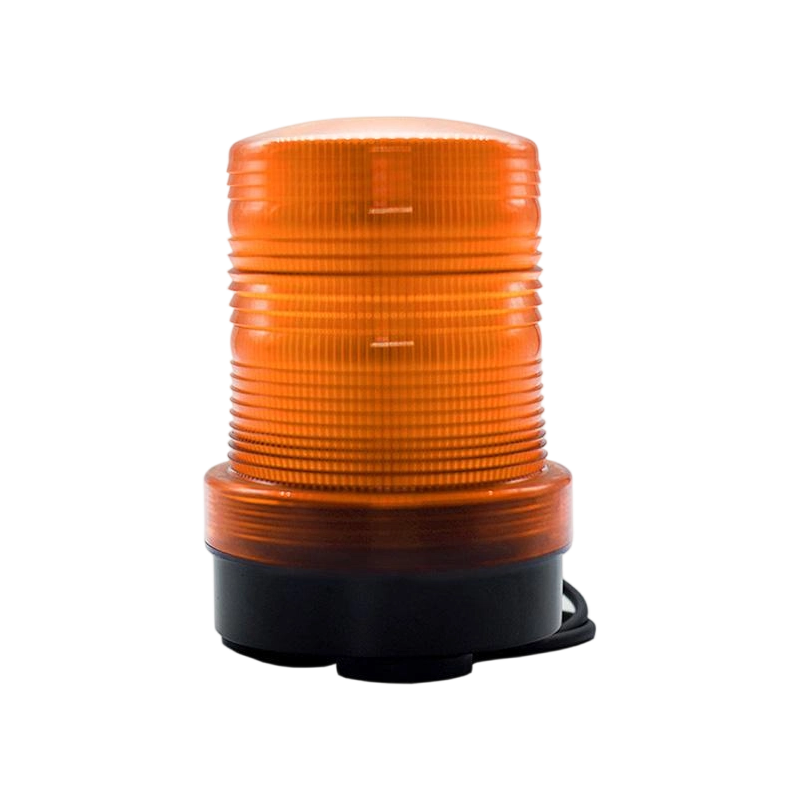
Strobe lights, conversely, produce rapid, intense light pulses generated through electronic circuitry. Rather than continuous rotation, strobes emit brief, high-intensity flashes at regular intervals, typically ranging from 60 to 120 flashes per minute. This pulsating effect creates a compelling visual stimulus that captures attention through the contrast between bright illumination and darkness. Strobe technology has become increasingly sophisticated with LED advancement, offering superior brightness output and minimal power consumption compared to earlier halogen-based systems.
Core Operational Differences
| Feature | Beacon Lights | Strobe Lights |
|---|---|---|
| Light Output | Continuous Rotation | Pulsed Flashes |
| Mechanism | Rotating Dome/Reflector | Electronic Pulse Generator |
| Flash Rate | 40-120 RPM | 60-120 FPM |
| Power Consumption | Moderate | Low (LED) |
| Maintenance | Rotating Parts Need Care | Minimal |
Light Pattern Characteristics and Visual Impact
Beacon Light Patterns
Beacon lights create a sweeping, circular light pattern as the reflective dome or lens rotates around a fixed bulb source. This continuous motion produces a rhythmic visual effect that, while attention-catching, maintains a more predictable and uniform distribution across the 360-degree field. Observers perceive beacon lights as a reliable, persistent warning indicator—the kind of steady vigilance that communicates "caution in operation" across long distances.
The practical range of beacon visibility extends considerably, often reaching 300 to 500 meters under normal atmospheric conditions. The consistency of beacon illumination makes them particularly suitable for stationary equipment warning and general area alerting where continuous presence is essential.
Strobe Light Patterns
Strobe lights generate rapid, intense bursts of illumination separated by brief dark intervals. This contrast between extreme brightness and darkness engages the human visual system more aggressively, triggering faster perception and response. The flashing pattern essentially creates multiple "attention grabbing" moments per second, making strobes exceptionally effective at commanding immediate notice, particularly in high-ambient-light environments or from significant distances.
The visibility range of strobes often exceeds that of beacon lights, with quality LED strobe systems delivering effective warning signals beyond 600 meters in favorable conditions. The pulsing nature makes strobes invaluable in scenarios demanding rapid hazard communication.
Visual Perception Comparison
Ideal Applications and Use Cases
When to Use Beacon Lights
Beacon lights excel in scenarios where continuous, steady warning is essential. These include:
- Stationary heavy equipment on construction sites requiring persistent site illumination
- Slow-moving or low-speed vehicle operations where constant visibility aids situational awareness
- Maintenance and service vehicle lighting during routine operations
- Loading dock and warehouse equipment warnings where predictable patterns suit operational rhythm
- Agricultural and forestry equipment operating in rural environments at moderate speeds
- Long-term outdoor stationary alerts requiring reliable, continuous operation
Beacon technology suits environments where the predictability and steady presence of light contributes to workplace safety culture and operator awareness without aggressive visual demands.
When to Use Strobe Lights
Strobe lights address situations demanding aggressive, immediate attention capture. Optimal applications include:
- Emergency and rescue vehicle warning systems requiring maximum visibility
- High-speed vehicle operations on roadways where rapid hazard communication is critical
- Heavy traffic environments where ambient light levels are high and attention competition is fierce
- Reversing and backing operations on forklifts and industrial lift trucks requiring urgent alertness
- Rotating or mobile equipment in complex job sites with multiple hazard sources
- Nighttime or low-visibility condition operations where intense illumination proves essential
- Regulatory environments requiring maximum-intensity warning systems for compliance
Strobe systems prove invaluable wherever split-second recognition of hazards directly impacts safety outcomes.
Hybrid Approaches
Modern industrial safety lights increasingly employ hybrid systems combining beacon and strobe capabilities. Operators can switch between steady beacon mode for routine operations and strobe mode for high-risk activities, offering operational flexibility and optimized power management. This adaptive approach addresses diverse safety requirements within single equipment deployments.
Brightness, Visibility, and Practical Performance Metrics
Luminous Output Comparison
Strobe lights typically deliver superior peak brightness during pulse phases, often reaching 500-1500 lumens in high-performance LED systems. However, averaged across the full on/off cycle, beacon lights with continuous LED operation can maintain consistent 300-600 lumens throughout operation. The human eye responds more aggressively to strobe's peak brightness and flash contrast than to beacon's continuous steady state, resulting in perceived strobe brightness exceeding actual measured lumens.
Visibility Under Various Conditions
| Lighting Condition | Beacon Effectiveness | Strobe Effectiveness |
|---|---|---|
| Clear Daylight | Moderate | Excellent |
| Overcast/Cloudy | Good | Very Good |
| Dusk/Dawn | Excellent | Excellent |
| Night | Very Good | Excellent |
| Heavy Weather | Fair | Good |
Range and Detection Distance
Beacon lights typically achieve recognition distances of 300-500 meters in optimal clear conditions. Strobe lights, leveraging their high-intensity pulse characteristic, commonly reach 600-800 meters or greater depending on flash rate and optical design. In heavy precipitation or fog, both technologies experience range reduction of 40-60 percent, though strobes maintain superiority through their intensity advantage.
Technology Evolution: From Incandescent to LED
Traditional Incandescent and Halogen Systems
Earlier generations of beacon and strobe lights relied on incandescent or halogen bulb technology. These systems generated heat as a byproduct, reducing efficiency and creating thermal management challenges. Bulb lifespan averaged 1000-2000 operating hours, necessitating frequent replacement and maintenance scheduling. Power consumption remained relatively high, ranging from 25-55 watts depending on intensity requirements.
Modern LED Technology Advantages
Contemporary industrial LED lighting systems have revolutionized beacon and strobe performance across multiple dimensions:
- Energy Efficiency: LED systems consume 60-70 percent less power than comparable incandescent alternatives, significantly reducing onboard electrical demands and improving operational economics.
- Durability: Solid-state electronics eliminate mechanical failure points, with typical LED lifespan exceeding 50,000 operating hours or 10 years of continuous operation.
- Instant Response: LED technology enables instantaneous on/off switching, facilitating precise strobe timing and eliminating warm-up delays present in traditional bulbs.
- Temperature Tolerance: LEDs operate reliably across extreme temperature ranges from -40°C to +70°C without performance degradation.
- Brightness Consistency: Light output remains stable throughout operational life, contrasting with incandescent bulbs that dim progressively as filaments age.
- Compact Design: LED arrays enable smaller, more aerodynamic light fixtures with improved vehicle integration.
Smart Control and Programmability
Modern LED beacon and strobe systems increasingly incorporate electronic controls enabling:
- Adjustable flash rates and intensity levels matching specific operational requirements
- Color selection options (amber for caution, red for emergency, white for work area illumination)
- Synchronized multi-light patterns for coordinated vehicle or equipment warnings
- Wireless control integration for remote operation and status monitoring
- Automatic mode switching based on vehicle speed or operational state
Regulatory Compliance and Safety Standards
Industrial and Transportation Standards
Beacon and strobe light deployment is governed by comprehensive regulatory frameworks designed to ensure consistency and operator safety. Key standards include:
- ANSI/ASSE RP29 standards establishing requirements for industrial mobile equipment warning systems
- DOT regulations specifying commercial vehicle lighting for roadway operations
- ISO 9878 defining rotating warning lights for industrial use
- OSHA guidelines requiring hazard warning systems for construction and heavy equipment operations
- Local and jurisdictional regulations varying by region and industry sector
Color Coding and Meaning
| Light Color | Typical Application | Regulatory Context |
|---|---|---|
| Red | Emergency and hazard alerts | Emergency vehicles, high-risk operations |
| Amber/Yellow | Caution and warning | Construction, maintenance, slow movement |
| White | Work area illumination | Operational lighting, area safety |
| Blue | Police and specialized vehicles | Law enforcement, emergency response |
Selection between beacon and strobe lighting must align with applicable regulatory requirements in your specific jurisdiction and industry sector. Many regions permit operator choice between technologies for certain applications, while others mandate specific solutions for particular vehicle classes or operations.
Installation, Mounting, and Integration Considerations
Beacon Light Installation
Beacon lights typically mount via magnetic base, threaded stud, or permanent bracket installation onto vehicle roof or upper frame locations. The rotating dome design requires clearance above the mounting surface, necessitating minimum 6-8 inches of vertical space. Electrical connections involve standard 12V or 24V DC wiring with simple two-wire or three-wire configurations for basic on/off and flash-rate control.
Strobe Light Installation
Strobe lights feature more compact form factors enabling diverse mounting options including flush-mount recessed applications. Installation typically requires 12V or 24V DC electrical supply with electronic control modules for flash-rate and intensity management. Modern strobes accommodate wireless integration, facilitating retrofit applications on equipment lacking dedicated wiring infrastructure.
Environmental Protection Requirements
- IP67 or higher ingress protection ratings ensuring dust and moisture resistance
- Polycarbonate or tempered glass lens design withstanding vibration and impact
- Gasket and seal systems preventing water intrusion in marine or high-pressure wash environments
- Corrosion-resistant housing materials (aluminum, stainless steel) for long-term durability
- Vibration isolation mounts reducing fatigue stress on mounting hardware
Proper installation ensures lighting systems withstand operational stresses and environmental exposure, maintaining performance throughout extended service life.
Maintenance, Durability, and Long-Term Reliability
Beacon Light Maintenance Demands
Beacon lights with rotating components require periodic maintenance addressing:
- Bearing lubrication to minimize friction and ensure smooth rotation
- Lens cleaning removing dirt and oxidation that reduces light transmission
- Bulb replacement (traditional systems) or LED array inspection (modern systems)
- Electrical connection verification preventing corrosion-induced failures
- Motor bearing inspection for wear or degradation affecting rotation consistency
Traditional incandescent beacon lights typically require maintenance every 6-12 months, while LED beacon systems extend intervals to 12-24 months or longer depending on environmental exposure.
Strobe Light Maintenance Requirements
Strobe systems' solid-state construction minimizes maintenance needs significantly:
- Periodic lens cleaning maintaining optical clarity
- Electrical connection inspection preventing corrosion
- Electronic control module testing ensuring proper flash rate operation
- Physical inspection for impact damage or lens cracks
LED strobe systems often operate maintenance-free for extended periods, with inspections recommended annually or per manufacturer specifications. The absence of mechanical components eliminates wear-related failure modes affecting traditional beacon designs.
Lifespan Comparison
Traditional beacon lights with incandescent bulbs achieve 2-3 years typical service life before deteriorating performance demands replacement. Modern LED beacon systems extend lifespans to 7-10 years or greater, delivering superior return on investment despite higher initial acquisition costs. LED strobe systems commonly achieve 10-15 years service life under normal operational conditions, reflecting their inherent durability and minimal wear mechanisms.
Power Consumption and Electrical System Impact
Electrical Load Analysis
Beacon and strobe selection significantly impacts vehicle electrical system design, particularly in battery-powered equipment or vehicles with limited charging capacity.
Traditional incandescent beacon systems draw 35-55 amperes continuously, creating substantial demand on smaller electrical systems. This ongoing load accelerates battery discharge and requires oversized alternators or generators for continuous operation. Long duty-cycle applications spanning 8-12 hour shifts create considerable cumulative energy consumption.
Modern LED beacon systems reduce draw to 5-15 amperes, cutting electrical demand by 70-80 percent. This reduction translates directly to extended operational range for battery-powered equipment and reduced charging infrastructure requirements.
Strobe systems demonstrate even lower power profiles, typically consuming 3-8 amperes due to their pulsed operation cycles. The intermittent duty cycle results in lower average power consumption despite peak-phase intensity exceeding beacon brightness.
Operational Economics
| System Type | Initial Cost | Annual Power Cost | Maintenance Cost |
|---|---|---|---|
| Incandescent Beacon | Lower | Higher | Moderate |
| LED Beacon | Higher | Low | Minimal |
| LED Strobe | Moderate | Very Low | Minimal |
Over 5-10 year operational periods, LED systems typically deliver superior total-cost-of-ownership compared to traditional incandescent technology despite higher upfront expenses.
Decision Matrix: Selecting Between Beacon and Strobe Lighting
Evaluation Framework
Choosing between beacon and strobe technologies requires systematic assessment across multiple factors:
Operational Speed Assessment
Equipment operating below 15 miles per hour generally benefits from beacon lighting, which provides adequate warning at lower speeds where observers have reaction time to process steady illumination patterns. Equipment exceeding 25 miles per hour benefits substantially from strobe technology's enhanced attention capture, particularly in high-traffic or complex environments.
Environmental Context Evaluation
Daytime roadway operations with high ambient light levels strongly favor strobe selection due to superior penetration through bright conditions. Controlled industrial environments with lower ambient illumination accommodate beacon lighting effectively. Weather-prone regions with frequent precipitation or fog benefit from strobe systems' superior range maintenance in challenging visibility conditions.
Regulatory and Industry Requirements
Certain industries and jurisdictions mandate specific lighting approaches. Emergency response vehicles universally employ strobe technology. Construction and utility sectors often permit operator discretion, though site-specific regulations may impose requirements. Agricultural and forestry equipment typically utilizes beacon systems, though modern operations increasingly adopt strobe technology for high-speed roadway transit between job sites.
Budget and Economic Considerations
Initial budget constraints may favor beacon systems' lower acquisition costs for small fleet operations. Conversely, large fleet deployments benefit from LED strobe systems' operational efficiency and minimal maintenance demands, delivering superior long-term economics despite higher initial investment.
Emerging Trends and Future Developments
Advanced LED Integration
Continuing LED technology refinement delivers progressively higher brightness output in compact form factors. Future beacon and strobe systems will likely incorporate extremely bright chips enabling even smaller physical profiles while maintaining superior visibility. Directional LED arrays promise more focused illumination patterns reducing light waste and improving energy efficiency further.
Smart Connectivity and IoT Integration
Next-generation warning light systems increasingly integrate with vehicle telematics and fleet management platforms. Automated systems can adjust light patterns based on vehicle speed, proximity to hazards, or operational state. Real-time monitoring enables predictive maintenance, alerting operators to component degradation before failure occurs.
Adaptive and Intelligent Systems
Future beacon and strobe systems may incorporate sensors detecting ambient light levels and automatically optimizing flash rates or brightness accordingly. Machine learning algorithms could evaluate accident data and operational patterns, recommending optimal lighting configurations for specific use cases within individual organizations.
Sustainability Considerations
Environmental consciousness is driving continued efficiency improvements in industrial lighting. Future systems will achieve exceptional energy performance, potentially operating from small auxiliary solar charging systems or kinetic energy harvesting mechanisms. Recyclable component design will facilitate end-of-life material recovery and circular economy participation.
Frequently Asked Questions
Q1: Can beacon and strobe lights be used simultaneously on the same vehicle?
Yes, many modern vehicles employ combination systems utilizing both beacon and strobe capabilities. This approach enables operators to select beacon mode for routine operations and activate strobe functionality during high-risk activities or emergency situations. Combined systems maximize operational flexibility while optimizing power consumption through mode selection.
Q2: Are beacon lights effective in daytime driving situations?
Beacon lights offer moderate effectiveness during bright daylight conditions, though performance diminishes compared to strobe systems. Daytime beacon visibility typically extends 200-300 meters compared to strobe visibility of 400-600 meters under identical conditions. For critical daytime applications demanding maximum conspicuity, strobe technology proves superior.
Q3: What is the typical lifespan difference between beacon and strobe LED systems?
Modern LED beacon and strobe systems typically achieve 50,000+ operational hours, translating to 7-10 years continuous operation or 15-20 years with standard duty cycles. Lifespan differences between beacon and strobe technologies are minimal with LED implementation; both substantially exceed traditional incandescent system longevity.
Q4: Do strobe lights carry health risks including seizure triggering in photosensitive individuals?
Industrial vehicle strobes operate at flash rates (60-120 cycles per minute) exceeding those identified as photosensitive seizure triggers (typically below 30 cycles per minute). However, individuals with photosensitivity should consult medical professionals regarding exposure to any flashing light sources. Workplace accommodations should address documented medical needs.
Q5: Which lighting type better suits fork lift and heavy equipment applications?
Both beacon and strobe technologies apply effectively to forklift and industrial lift truck operations. Stationary or slow-moving equipment operations benefit from beacon warning lights providing continuous operational presence. Reversing operations and movement through congested work areas benefit from strobe systems' aggressive attention capture, reducing collision risk during critical maneuvers.
Q6: How do weather conditions affect beacon versus strobe light performance?
Both technologies experience performance reduction in adverse weather, though strobe systems maintain relative advantage through higher peak brightness. Heavy precipitation reduces effective range approximately 40-50 percent for beacon systems and 30-40 percent for strobe systems. Fog and mist similarly impact both technologies, with strobes maintaining superiority through intensity advantage.
Q7: What electrical system upgrades are necessary when installing LED strobe lighting?
Modern LED strobe systems operate from standard 12V or 24V vehicle electrical systems without modification in most installations. Electronic control modules manage power delivery and flash timing. However, vehicles transitioning from traditional high-power incandescent systems to LED strobes may benefit from alternator optimization discussions with installers, though upgrades are rarely necessary.
Q8: Are there color selection considerations beyond regulatory requirements?
While regulatory mandates drive primary color selection, operational context influences practical choices. Amber light provides excellent contrast in natural environments and during daytime operations. Red conveys maximum urgency and suits emergency-adjacent applications. White light simultaneously serves warning and work-area illumination functions. Selection should balance regulatory compliance with specific operational visibility requirements.
For exclusive deals and latest offers, sign up by entering your email address below.

CONTACT
- 88 Chuangye Street, Qingshanhu Street, Lin 'an District, Hangzhou City, Zhejiang, China
- fldz@fengletech.com
- +86-571-61097576
- +86-13721109386
- +86-15067105688
NEWSLETTER
Contact us today to get your exclusive solution and quote.
We promise never to disclose your privacy.
Copyright © Hangzhou Fengle Electronic Technology Co., Ltd. All Rights Reserved
Custom Forklift Electrical Parts Manufacturers
