


 русский
  Español
  中文简体
中文简体
Industry News

Home / News / Industry News / What Should Buyers Know Before Choosing Industrial Vehicle Work Lights?
What Should Buyers Know Before Choosing Industrial Vehicle Work Lights?
Admin 2026-09-28Content
- 1 Why Industrial Vehicle Work Lights Are a Critical Procurement Category
- 2 What Are Industrial Vehicle Work Lights?
- 3 Core Features of High-Quality Industrial Vehicle Work Lights
- 4 Common Types of Industrial Vehicle Work Lights
- 5 How to Choose Industrial Vehicle Work Lights for Specific Machinery
- 6 Industrial Vehicle Work Lights Price and Cost Factors
- 7 Why Buyers Choose Specialized Industrial Vehicle Work Lights Suppliers
- 8 Installation and Maintenance Best Practices
- 9 Frequently Asked Questions
- 9.0.1 Q1: What is the difference between industrial vehicle work lights and standard vehicle lights?
- 9.0.2 Q2: Are LED industrial vehicle work lights better than halogen for construction machinery?
- 9.0.3 Q3: What does IP68 or IP69K mean for waterproof industrial vehicle work lights?
- 9.0.4 Q4: Can industrial vehicle work lights be customized for specific vehicles?
- 9.0.5 Q5: How is pricing determined for wholesale industrial vehicle work lights?
- 9.0.6 Q6: What voltage should I choose for forklift and excavator work lights?
- 9.0.7 Q7: How long do quality industrial vehicle work lights last?
- 10 Final Procurement Considerations
Why Industrial Vehicle Work Lights Are a Critical Procurement Category
Industrial vehicle work lights are not general-purpose accessories. They are task-specific lighting systems engineered for machines that operate in dust, mud, vibration, rain, and low-visibility conditions. For procurement teams, fleet managers, and equipment distributors, the search for reliable industrial vehicle work lights usually begins with a concrete problem: a forklift operating in an unlit warehouse, an excavator working a night shift on a construction site, or a loader moving material in a mining yard where glare and vibration destroy ordinary lamps.
The global shift toward LED industrial vehicle work lights has accelerated because LED technology delivers higher luminance per watt, longer service life, and better resistance to shock than halogen or xenon alternatives. Buyers searching for industrial vehicle work lights for sale are typically comparing three variables: durability, light output, and total cost of ownership. This guide addresses those variables with practical, technical, and procurement-focused insights.
Procurement note: In B2B industrial vehicle lighting, the lowest unit price rarely produces the lowest lifetime cost. A waterproof industrial vehicle work light that survives three years of daily vibration and washdown cycles often costs less per operating hour than a cheaper unit replaced every six months.
What Are Industrial Vehicle Work Lights?
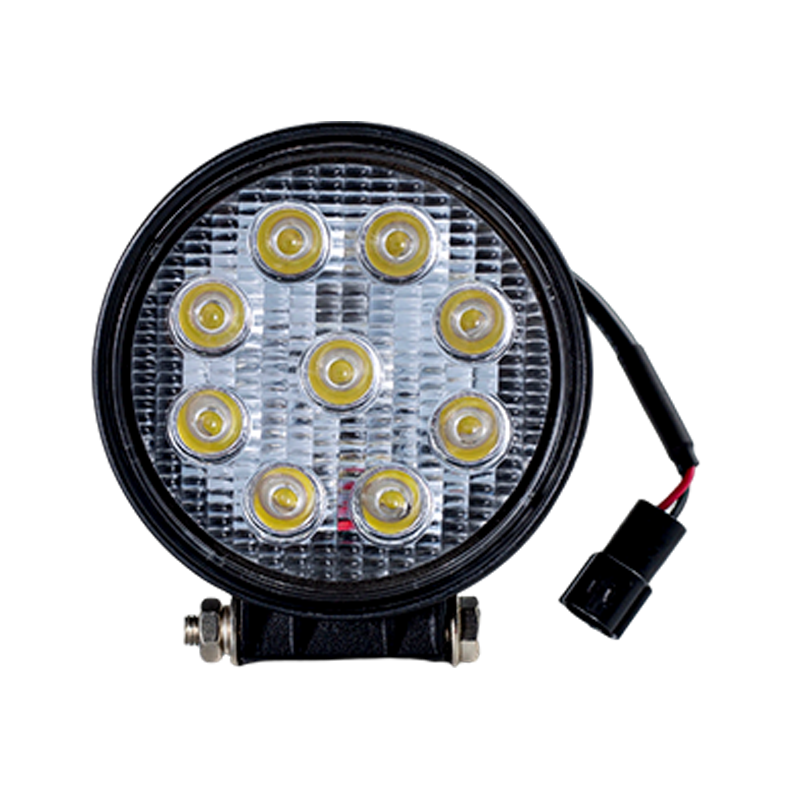
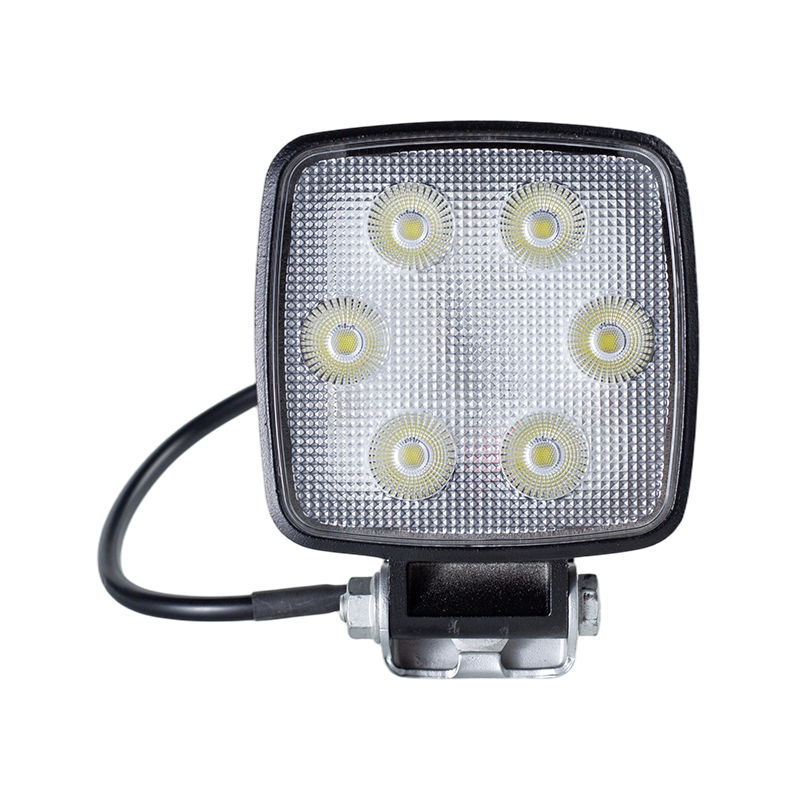
industrial vehicle work lights are ruggedized lighting fixtures designed to be mounted on or integrated into industrial vehicles, construction machinery, agricultural equipment, and off-road utility vehicles. Unlike standard automotive headlights, these lamps are built to operate continuously in harsh environments where shock, moisture, dust, and extreme temperatures are normal.
Core Application Environments
- Factory and warehouse material handling
- Outdoor construction and roadwork
- Mining and quarry operations
- Agricultural and forestry machinery
- Emergency and utility vehicle fleets
Typical Vehicle Platforms
- Forklifts and telehandlers
- Wheel loaders and backhoe loaders
- Excavators and trenchers
- Cranes and lifting equipment
- Industrial tractors and utility trucks
These fixtures are sometimes referred to as off-road vehicle work lights or industrial vehicle work lamps. The terminology varies by region and supplier, but the functional requirements remain consistent: high brightness, sealed construction, and resistance to mechanical stress.
Core Features of High-Quality Industrial Vehicle Work Lights
Not all work lamps are engineered to the same standard. The difference between a consumer-grade auxiliary light and a heavy duty industrial vehicle work light becomes obvious after months of operation in demanding conditions. The following features define professional-grade fixtures.
Mechanical Durability
Heavy duty industrial vehicle work lights use die-cast aluminum housings, stainless steel hardware, and vibration-resistant mounting systems. They are tested to withstand continuous shock from rough terrain, engine vibration, and incidental impact from debris.
Ingress Protection
Waterproof industrial vehicle work lights typically carry IP67, IP68, or IP69K ratings. This matters for machines that are pressure-washed, operated in rain, or exposed to slurry and dust. A sealed optical chamber prevents moisture ingress that would otherwise cause condensation, corrosion, and premature LED failure.
Light Output and Efficiency
LED industrial vehicle work lights deliver high lumen output at low wattage. This reduces alternator load and fuel consumption compared with halogen systems. Effective thermal management, including finned heat sinks and constant-current drivers, maintains output over thousands of hours.
Electrical Adaptability
Wide-voltage input, commonly 9V to 32V or 10V to 80V, allows the same fixture to be used across 12V and 24V vehicle systems. This simplifies inventory for distributors and fleet operators.
| Feature | Typical Specification | Procurement Benefit |
|---|---|---|
| Housing | Die-cast aluminum | Heat dissipation and impact resistance |
| Ingress protection | IP67 / IP68 / IP69K | Reliable in rain, dust, and washdown |
| Operating voltage | 9-32V DC or 10-80V DC | Cross-platform compatibility |
| Lens | Polycarbonate or tempered glass | Optical clarity and impact resistance |
| Connector | Deutsch or waterproof sealed plug | Corrosion-resistant electrical interface |
Common Types of Industrial Vehicle Work Lights
Buyers encounter several classification methods when sourcing industrial vehicle lighting. Understanding these categories helps narrow the selection and match the fixture to the vehicle and task.
By Light Source
- LED industrial vehicle work lights: the dominant choice for new procurement due to efficiency, lifespan, and vibration tolerance.
- Halogen work lights: still found in legacy fleets, but higher power draw and shorter bulb life make them less attractive for new installations.
- Xenon work lights: high intensity but higher cost and warm-up characteristics limit their use in stop-start industrial applications.
By Installation Type
- Mounted work lights: surface-mounted with brackets or bolts, common on cabs, booms, and rear counterweights.
- Embedded work lights: recessed into body panels or bumpers for a lower profile and protection from protruding impact.
By Vehicle Application
| Application | Recommended Attributes | Typical Mounting Position |
|---|---|---|
| Forklift | Compact housing, flood beam, IP67 | Overhead guard or mast |
| Loader | High output, wide voltage, shockproof | Cab roof or boom |
| Excavator | IP68 or IP69K, vibration resistant | Cab top or counterweight |
| Mining vehicle | Extreme dust and impact protection | Front and rear chassis |
How to Choose Industrial Vehicle Work Lights for Specific Machinery
Selection should follow the operating environment and task requirements rather than a generic brightness target. The following factors help buyers avoid over-specification or under-performance.
Working Environment Assessment
- Dust and debris: choose sealed optics and smooth housing surfaces that shed material.
- Rain and washdown: require waterproof industrial vehicle work lights with IP68 or IP69K protection.
- Heavy vibration: prioritize shockproof vehicle work lamps with rubber isolators or flexible mounts.
- Corrosive atmosphere: specify stainless steel fasteners and corrosion-resistant coatings.
Brightness and Beam Pattern
High brightness work lights for machinery should match the task. A narrow spot beam projects light over distance for travel and lifting visibility. A wide flood beam illuminates the immediate work area for loading, digging, and inspection. Many industrial vehicle work lights use a combination beam to balance both needs.
Voltage and Wiring Compatibility
Confirm the vehicle system voltage and connector type before ordering. A 9-32V DC fixture covers most 12V and 24V machines, while electric forklifts and specialty vehicles may require a wider input range.
Certification and Quality Documentation
For fleet and OEM procurement, request test reports covering ingress protection, vibration, and lumen maintenance. Certifications such as CE, RoHS, and E-Mark may be required depending on the destination market.
Industrial Vehicle Work Lights Price and Cost Factors
Price is a primary concern for B2B buyers, but industrial vehicle work lights price varies widely based on configuration and order volume. Understanding the cost drivers helps procurement teams evaluate quotations accurately.
Primary Cost Drivers
- Light source and driver: high-efficacy LEDs and constant-current drivers increase unit cost but improve lifespan.
- Housing material and finish: die-cast aluminum and corrosion-resistant coatings cost more than plastic or thin-wall alternatives.
- Ingress protection: IP68 and IP69K sealing requires additional gaskets, testing, and assembly precision.
- Beam optics: precision reflectors and lenses affect light distribution and manufacturing cost.
- Custom requirements: custom industrial vehicle work lights with specific connectors, brackets, branding, or packaging carry tooling and minimum order quantities.
Standard vs Custom Configurations
| Configuration | Cost Position | Best For |
|---|---|---|
| Standard LED work light | Lower unit cost | General replacement and fleet maintenance |
| Heavy duty waterproof model | Mid to upper range | Construction, mining, and outdoor machinery |
| Custom OEM configuration | Higher with tooling and MOQ | OEM production and branded aftermarket programs |
For buyers seeking industrial vehicle work lights for sale at competitive wholesale levels, order quantity and specification consistency are the strongest negotiation levers. Requesting a real-time industrial vehicle work lights price based on a defined specification produces more accurate quotations than open-ended inquiries.
Conversion path: If you need current pricing, customization options, or a wholesale quotation, contact the supplier with your vehicle type, voltage, mounting preference, and target order quantity. This information allows a precise industrial vehicle work lights price and reduces back-and-forth communication.
Why Buyers Choose Specialized Industrial Vehicle Work Lights Suppliers
Procurement from a focused supplier offers advantages that general lighting vendors cannot match. Specialized manufacturers understand the vibration profiles, electrical systems, and environmental exposure of industrial vehicles.
Manufacturing and Quality Control
- In-house die-casting, assembly, and testing
- Batch-level ingress protection and aging tests
- Consistent LED binning for color and output uniformity
Customization and OEM Support
- Custom beam patterns, housings, and connectors
- Private labeling and packaging for distributors
- Engineering support for new vehicle integration
Supply Chain Reliability
- Stable lead times for repeat orders
- Flexible MOQ for trial and volume programs
- After-sales support and warranty coverage
These factors matter for distributors, fleet managers, and OEM buyers who need a dependable industrial vehicle work lights for sale program rather than a one-time transaction.
Installation and Maintenance Best Practices
Correct installation extends the service life of industrial vehicle work lights and preserves warranty coverage.
Mounting Guidelines
- Use vibration-damping mounts where the vehicle experiences continuous shock.
- Position lights to avoid glare for the operator and nearby workers.
- Route wiring away from hot surfaces and moving components.
- Use sealed connectors and dielectric grease at electrical joints.
Maintenance Checks
- Inspect lens and housing for cracks or impact damage.
- Check mounting hardware for loosening after initial service.
- Clean optical surfaces with mild detergent and soft cloth.
- Verify connector sealing after washdown or seasonal changes.
Frequently Asked Questions
Q1: What is the difference between industrial vehicle work lights and standard vehicle lights?
Industrial vehicle work lights are engineered for continuous operation in harsh environments. They use more robust housings, higher ingress protection, and vibration-resistant mounting compared with standard automotive lighting.
Q2: Are LED industrial vehicle work lights better than halogen for construction machinery?
In most construction and industrial applications, LED work lights offer higher efficiency, longer service life, and better resistance to shock and vibration. Halogen remains in use in some legacy fleets but is less common in new procurement.
Q3: What does IP68 or IP69K mean for waterproof industrial vehicle work lights?
IP68 indicates protection against prolonged immersion, while IP69K indicates resistance to high-pressure and high-temperature washdown. Both ratings are relevant for machinery cleaned with pressure washers or exposed to heavy rain.
Q4: Can industrial vehicle work lights be customized for specific vehicles?
Yes. Custom industrial vehicle work lights can be configured with specific beam patterns, voltage ranges, connectors, mounting brackets, housing colors, and branding to match OEM or aftermarket requirements.
Q5: How is pricing determined for wholesale industrial vehicle work lights?
Price depends on LED output, housing material, ingress protection, beam optics, customization, and order quantity. Buyers should provide a detailed specification to receive an accurate industrial vehicle work lights price.
Q6: What voltage should I choose for forklift and excavator work lights?
Most industrial vehicles use 12V or 24V systems. A wide-voltage fixture rated for 9-32V DC covers both, while some electric and specialty vehicles may require a wider input range.
Q7: How long do quality industrial vehicle work lights last?
Service life depends on operating conditions and thermal management. Well-designed LED work lights commonly achieve tens of thousands of hours of operation before significant lumen depreciation.
Final Procurement Considerations
Selecting the right industrial vehicle work lights requires balancing light performance, durability, electrical compatibility, and cost. Buyers who define the operating environment, beam requirement, and voltage before requesting quotations receive more accurate pricing and fewer field failures.
For distributors and fleet operators, a consistent supply of heavy duty, waterproof, and shockproof work lamps simplifies inventory and reduces replacement frequency. For OEM and custom programs, early involvement with the lighting supplier improves integration and long-term reliability.
To discuss specifications, request samples, or obtain a wholesale quotation for industrial vehicle work lights, contact the supplier with your vehicle platform, voltage, mounting configuration, and estimated annual volume.
For exclusive deals and latest offers, sign up by entering your email address below.

CONTACT
- 88 Chuangye Street, Qingshanhu Street, Lin 'an District, Hangzhou City, Zhejiang, China
- fldz@fengletech.com
- +86-571-61097576
- +86-13721109386
- +86-15067105688
NEWSLETTER
Contact us today to get your exclusive solution and quote.
We promise never to disclose your privacy.
Copyright © Hangzhou Fengle Electronic Technology Co., Ltd. All Rights Reserved
Custom Forklift Electrical Parts Manufacturers
